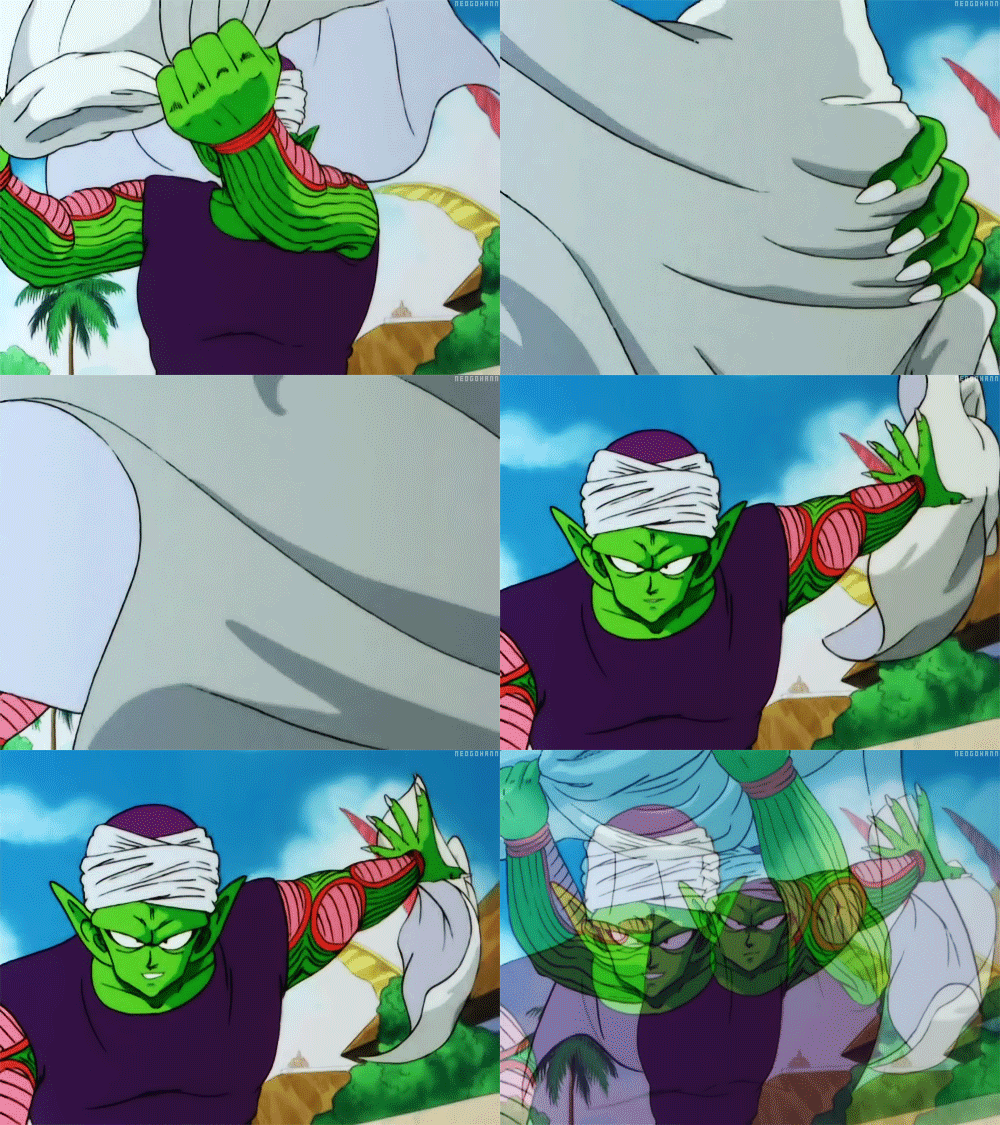
KaiserNeko wrote:No, he's right. That's the exact shot; I had to do my research for it.
Whoa!
You didn't expect research? C'mon DBZA is riddled with facts and jokes only hardcore fans would know, along with call backs and call forwards. There really is no difference from this one, and the reveal of 17 and 18's real names 10 or so episodes back besides tone and poignancy.
I was more amazed at how they found an actual part in the anime where they could put in Gero's son's death at Goku's hands. I would have never thought that the Kamehameha scene would fit it so well, even after rewatching DB 3 or 4 times throughout the years.
Eh the Pilaf Gang I don't mind on the list...but man does Super extremely sour them for me. So much of their useless time could go to more well deserving characters...or they could at least be written better. Future Mai is the closest to likable. Don't fancy them topping Bebi who I think is a pretty underrated villain cause of LOLGTTEHSUXS.
Why Dragon Ball Consistency in something such as power levels matter!
Spoiler:
Doctor. wrote:I've explained before, I'll just paraphrase myself.
Power levels establish tension and drama. People who care about them (well, people who care about them in a narrative) don't care about the big numbers or the fancy explosions. If you have character A who's so much above character B, who's the main character, you're gonna be left wondering how in the hell character B, the character we're supposed to care and root for, is going to escape the situation or overcome the odds. It makes us emotionally invested.
If character B doesn't escape the situation in a believable way that's consistent with previous events, then that emotional investment is gone. It was pointless tension, pointless drama made just to suck in the viewer. It has no critical value whatsoever. The audience is left believing that the author can just create whatever scenarios he wants and what happens to the characters is decided by whatever the author wants to happen, regardless of the events that happened in the story. Which, in fairness, is what happens, but the audience wants to be fooled. The audience wants to know that the world they're following has rules. That the world they're invested in isn't going to bend to external factors that are irrelevant to them.
An author can do whatever he wants with the characters, that's not false. But the author should also have the responsibility to make sure it fits in cohesively with the other events in the narrative he has created.
dbzfan7 wrote:Eh the Pilaf Gang I don't mind on the list...but man does Super extremely sour them for me. So much of their useless time could go to more well deserving characters...or they could at least be written better. Future Mai is the closest to likable. Don't fancy them topping Bebi who I think is a pretty underrated villain cause of LOLGTTEHSUXS.
Future Mai in Super makes me wish they were as competent in Dragonball.
dbzfan7 wrote:Eh the Pilaf Gang I don't mind on the list...but man does Super extremely sour them for me. So much of their useless time could go to more well deserving characters...or they could at least be written better. Future Mai is the closest to likable. Don't fancy them topping Bebi who I think is a pretty underrated villain cause of LOLGTTEHSUXS.
Future Mai in Super makes me wish they were as competent in Dragonball.
They could at least have something more interesting or worthwhile about them if they're gonna stick around. But no. They just take away screen time from people or story elements that could really use the time. It's wasted on one note jokes. They were fine and fun for Dragon Ball when they had a point. It'd be like having Tao Pai Pai come back to want to assassinate Goku in the upcoming episode as the true assassin, but he constantly fails because he's far outdated. Then they drag that joke on for dozens upon dozens of episodes.
Why Dragon Ball Consistency in something such as power levels matter!
Spoiler:
Doctor. wrote:I've explained before, I'll just paraphrase myself.
Power levels establish tension and drama. People who care about them (well, people who care about them in a narrative) don't care about the big numbers or the fancy explosions. If you have character A who's so much above character B, who's the main character, you're gonna be left wondering how in the hell character B, the character we're supposed to care and root for, is going to escape the situation or overcome the odds. It makes us emotionally invested.
If character B doesn't escape the situation in a believable way that's consistent with previous events, then that emotional investment is gone. It was pointless tension, pointless drama made just to suck in the viewer. It has no critical value whatsoever. The audience is left believing that the author can just create whatever scenarios he wants and what happens to the characters is decided by whatever the author wants to happen, regardless of the events that happened in the story. Which, in fairness, is what happens, but the audience wants to be fooled. The audience wants to know that the world they're following has rules. That the world they're invested in isn't going to bend to external factors that are irrelevant to them.
An author can do whatever he wants with the characters, that's not false. But the author should also have the responsibility to make sure it fits in cohesively with the other events in the narrative he has created.
dbzfan7 wrote:
They could at least have something more interesting or worthwhile about them if they're gonna stick around. But no. They just take away screen time from people or story elements that could really use the time. It's wasted on one note jokes. They were fine and fun for Dragon Ball when they had a point. It'd be like having Tao Pai Pai come back to want to assassinate Goku in the upcoming episode as the true assassin, but he constantly fails because he's far outdated. Then they drag that joke on for dozens upon dozens of episodes.
That actually sounds hilarious to me, but I like the Pilaf gang in Super so it makes sense that it would. XD
Okay, going into the top 10 I wanna make some predictions.
Kaiser, Can good people who are antagonists make it onto the list? Such as competitors in the budokai. They were antagonists, but not evil, are they considered villains for the purposes of the list?
Pretty cool look at Super. Gonna have to heavily disagree with some of the U6 stuff. Magetta is fun for design and moves, but not really as a character. Frost is lamer Freeza. Hit is all style not much substance. Cabba is bland as all hell while his background is really the only intriguing thing about him, as well as Vegeta's stance towards him. He feels to me like another Gohan. Champa and Vados are basically lesser clones of their U7 selves to me unfortunately. More so Vados than Champa who gets more to separate him from Beerus. Very surprised though by what was said about Zamasu. Especially with how highly he is thought of here. Definitely agree on Black though. They really made that work. A shame he was tossed away behind Zamasu who was the less interesting version. Part of me kinda would have rathered Black somehow be always around. Goku's body somehow effected his thought process.
Nonetheless very fascinating look and bonus of DBcember whether I agree or disagree. Keep up the work.
Why Dragon Ball Consistency in something such as power levels matter!
Spoiler:
Doctor. wrote:I've explained before, I'll just paraphrase myself.
Power levels establish tension and drama. People who care about them (well, people who care about them in a narrative) don't care about the big numbers or the fancy explosions. If you have character A who's so much above character B, who's the main character, you're gonna be left wondering how in the hell character B, the character we're supposed to care and root for, is going to escape the situation or overcome the odds. It makes us emotionally invested.
If character B doesn't escape the situation in a believable way that's consistent with previous events, then that emotional investment is gone. It was pointless tension, pointless drama made just to suck in the viewer. It has no critical value whatsoever. The audience is left believing that the author can just create whatever scenarios he wants and what happens to the characters is decided by whatever the author wants to happen, regardless of the events that happened in the story. Which, in fairness, is what happens, but the audience wants to be fooled. The audience wants to know that the world they're following has rules. That the world they're invested in isn't going to bend to external factors that are irrelevant to them.
An author can do whatever he wants with the characters, that's not false. But the author should also have the responsibility to make sure it fits in cohesively with the other events in the narrative he has created.