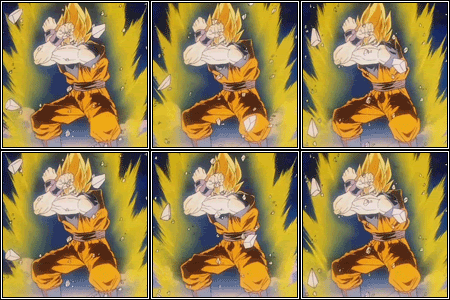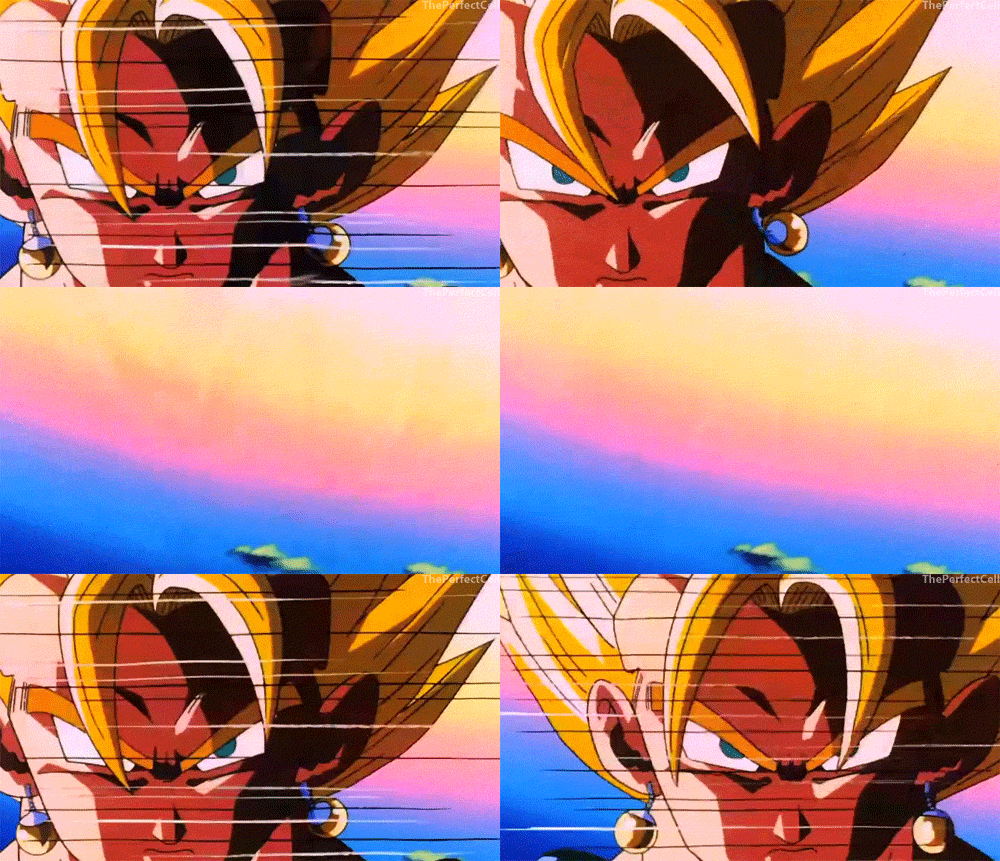
Three ideas come to my mind right now, but there are many more good things previous games did that would deserve to be carried over to some of the new games.
(Note that my pictures don't fully represent the original Super NES games, as those have slightly - yet obvious - tweaked elements to them - like the writings.
But they are the only ones I happen to have in my files right now...)
1) A MULTIPLE-BRANCHING STORY
A nice feature from Super Butoden was a story mode that could be influenced by your decisions as well as your victories and defeats (rather than defeats leading to a "Retry?" or "Game Over").
It had a good replayability as the player was often curious to reproduce the original story as much as possible, but also explore another road:
what if Trunks had been the most powerful warrior chosen by Goku during the Cell Game?
what if Vegeta had been killed by Bojack and Zangya due to poor decisions on your part?
what if you had been aware of a trap and able to play around it rather than getting tricked?
There was no actual way to lose, as the story went on various paths to keep going.
Following certain condition would lead to two "superboss" secret battles and a "true ending".

The story mode in Super Butoden 2 would allow you to stick to the original plot or tweak it - willingly or unwillingly.
There were a lot of surprising twists and variations to discover by playing it over again.
From what I remember, very few stages in the latest games have an actual influence on gameplay (but maybe it just comes from my very basic way to play them). There can be buildings you can destroy, but that doesn't change many things in the way you play. The most game-changer element is the Tenkaichi Budokai stage that happens to be very narrow horizontally and extremely expanded vertically compared to regular stages, which is refreshing.
But back then, in the Super Butoden series, some stages implied particular rules that would have an influence on your usual way to play it.
Playing underwater would drastically slow the action down if I remember well, something you had to take in account in your reactions, inputs and attempts to surprise a human opponent who could much more easily "see you coming" when you tried an attack or a special move. You could fly up slightly above water for a while, but ending up locked in underwater fighting was pretty much unavoidable at some point, and you had to be ready for it.
Playing in Babidi's spaceship would cancel any possibility to fly, taking out the usual vertical aspect of stages and forcing players to rely solely on the ground level, which made some strategies impossible or harder to perform.
Stages could have an actual influence on the way you played that could cause some handicap to some players depending on the way they usually played.


Babidi's spaceship would turn off part of the gameplay, as no flight option existed, locking players in a much more direct fight.
With enough creativity, game designers could also think of it as the opposite:
a level entirely based on verticality through the various floors, with very little horizontal space around.
This is an idea that not everyone is going to like depending on their preferences, because some like to use Dragon Ball games sort of like a giant collection of toy soldiers they can use to recreate battles between hundreds of potential characters.
I would rather have less characters available, but each one having their own set of special moves and their own particularities and perks in the gameplay.

Back then, it was common to have no more than ten characters (including the secret ones) at most.
Of course, we need to have more than that nowadays, but do we need 200 characters?
Or do we rather need them all to have their own set of unique animations and moves influencing the gameplay in various ways?


 ).
).