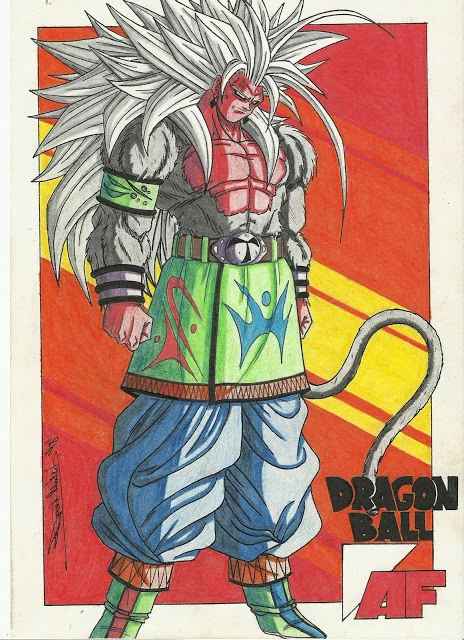
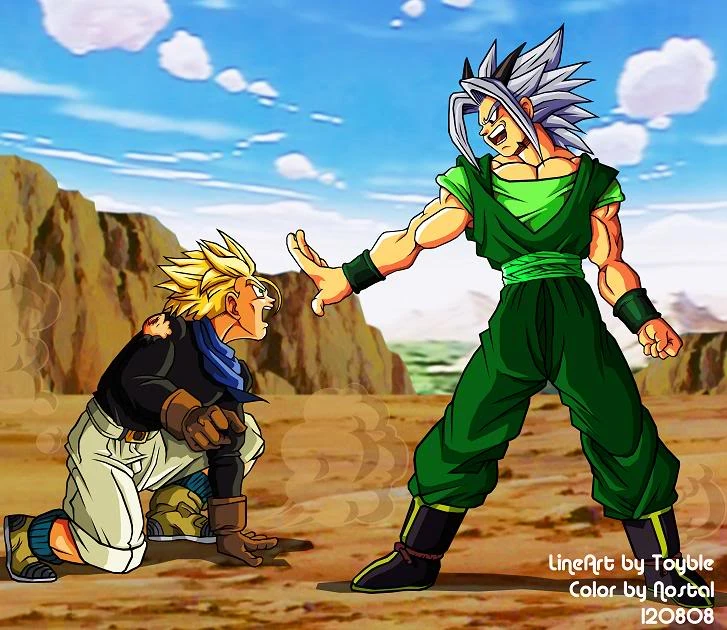
This came up in another thread recently, and I find it so fascinating, I think it deserves its own discussion. Rumors of hidden Dragon Ball material, or just plain inaccurate news about the series, have been swirling in the online either since the series first gained global popularity. I think we're all familiar with AF and its most commonlly associated visuals (your Super Saiyan 5 Gokus and your Xicors and such). It seems ridiculous to believe a full series could exist in Japan and be hidden from the rest of the world now, but in the early days of online interaction and interest in Japanese media, that idea truly did gain a degree of traction, and supporters were able to pull enough visuals out of the ether -- mostly unrelated fan art, some projects that spun out of AF rumors and in turn added new fuel -- to convince the young and the uninitiated. In a time when the series had stalled out in Japan, but was just starting to gain widespread popularity in the West, arriving in piecemeal form between years of bootlegs and nascent TV dubs, I can see how, coupled with the early days of online conversation, those kind of rumors would flourish.
What amazes me is that the series has never fully lost that mystique. Despite living in age where endless repositories of information are at our fingertips, those kinds of rumors have never truly vanished.
The image that brought up the conversation in the other thread was this rather harmless Facebook meme. You know, something your twelve-year-old brother would post:
[spoiler]
 [/spoiler]
It's obviously inaccurate, but widespread enough to have spread misinformation about a new crop of villains. (I can actually see here how an initial piece of joke fanart was taken out of context, but the fact it gained traction with that label is really kind of amazing.)
Similarly, a while back I took the following screenshot as a particularly egregious example of the types of images and content that circulate on the clickbait side of Dragon Ball YouTube, but by no means is this isolated to one channel:
First video: "New gods revealed!" + unrelated art. Two weeks later: Okay, I guess they're actually revealed now?
My joke entry on a nonexistent set of canonical "Documents" has been up at the Dragon Ball Wiki for weeks. The first comment on the talk page? Someone giving it the benefit of the doubt to ask if it was legit, despite it containing absolutely absurd information like the fact the documents make the viewer feel like "strong, electric meat."
We're still getting this stuff. On top of it, AF at some point reverse pollinated into Japanese fan culture, where it received a few well known douijinshi runs, whose material then circulated back into the West to fuel rumors anew.
How is it that Dragon Ball, with its relatively uncomplicated history as a serialized manga, a handful of anime adaptations, and an average amount of merchandising for a series of its popularity, continues to have such an aura of mystique around it? How is it that people continue to produce, and believe, completely unfounded rumors not only about its production, but about the existence or lack thereof of swathes of actual content? Now that the series has returned to TV, how is it that for such a straight forward production, such a rampant fake-news/fake-announcement cycle can exist? I don't see these as uncoupled phenomena, particularly because, as far as I'm aware, they're unique to Dragon Ball. I don't follow other long-running anime enough to compare, but I don't believe any others deal with the same sorts of rumors and misinformation, either in scope or frequency.
What causes it? Simply a lightning-in-a-bottle combination of foreign exoticism, younger viewers, and nascent internet culture giving rise to a culture of rumors and mystique that became part of the series' identity?
Let's talk about Dragon Ball's fake news problem, 1996-current, and the seemingly one-of-a-kind mass psychology behind it. Am I off base in trying to make a connection between current fake announcements and the mystical rumors of old? I hope some first- or second-generation fans can weigh in.
EDIT --
Here are some other elements of Dragon Ball's presence in Western fan culture that may or may not be connected to this general aura of mystique/prevalence of misinformation:
- The popularity of early, inaccurate translations of groups like Anime Labs misrepresenting the series' tone and target audience
- Marketing campaigns founded on misrepresenting video elements of the series, a la FUNimation's orange bricks
- Things like "The Lost Episodes" even? The fact that the series was released stateside out of order?
- All of the above coupled with the fact that, for many, this was their first time following any kind of foreign media, leading to a sense of mystique maintained into an entire generation's adulthood? A foreign-language production does leave information slightly more opaque.