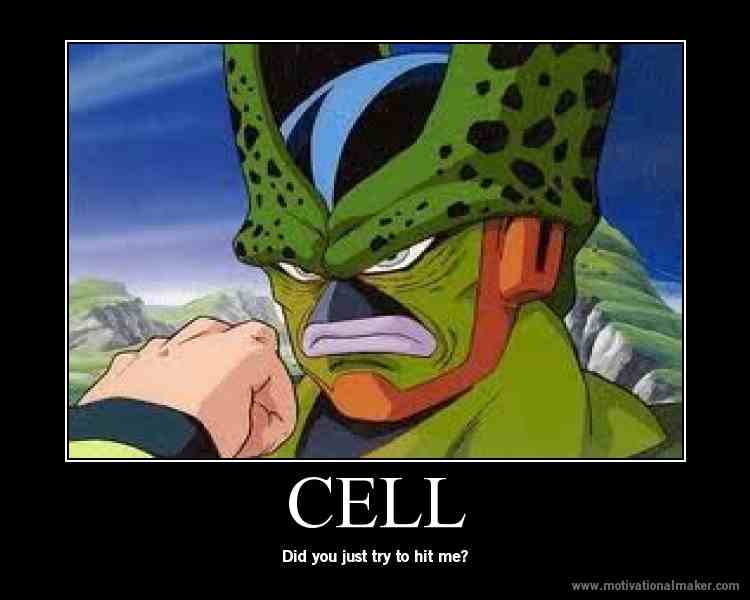
Also Goku doesn't need energy. He could snap the little shit's neck with far less than 1% of his power.
Why Dragon Ball Consistency in something such as power levels matter!
Spoiler:
Doctor. wrote:I've explained before, I'll just paraphrase myself.
Power levels establish tension and drama. People who care about them (well, people who care about them in a narrative) don't care about the big numbers or the fancy explosions. If you have character A who's so much above character B, who's the main character, you're gonna be left wondering how in the hell character B, the character we're supposed to care and root for, is going to escape the situation or overcome the odds. It makes us emotionally invested.
If character B doesn't escape the situation in a believable way that's consistent with previous events, then that emotional investment is gone. It was pointless tension, pointless drama made just to suck in the viewer. It has no critical value whatsoever. The audience is left believing that the author can just create whatever scenarios he wants and what happens to the characters is decided by whatever the author wants to happen, regardless of the events that happened in the story. Which, in fairness, is what happens, but the audience wants to be fooled. The audience wants to know that the world they're following has rules. That the world they're invested in isn't going to bend to external factors that are irrelevant to them.
An author can do whatever he wants with the characters, that's not false. But the author should also have the responsibility to make sure it fits in cohesively with the other events in the narrative he has created.
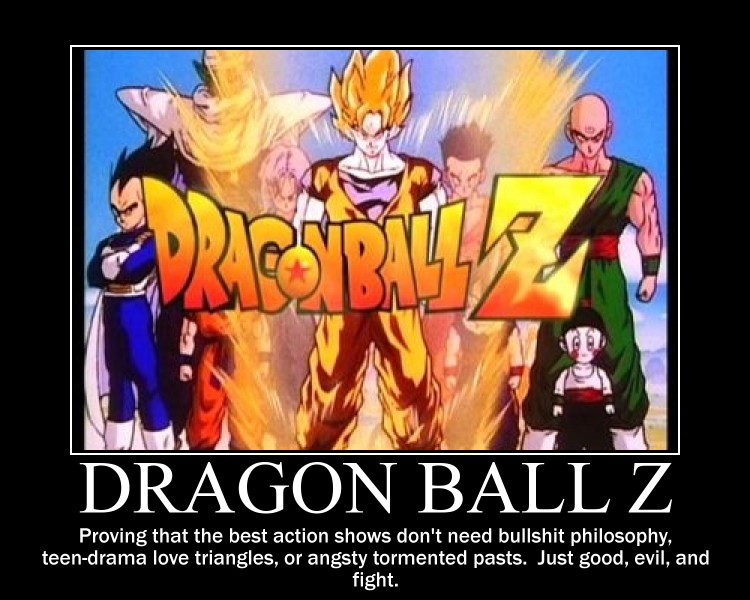
Did Beiber just say DBZ sucked? Oh boy, he's gonna receive over 8,000 death threats.
Vegeta: "Funny... I seem to recall Kakarot being fed the same information right before he transformed; the distinct look on your faces when he went Super Saiyan didn't exactly inspire confidence. One does not predict or calculate power like ours." Youtube channel: http://www.youtube.com/user/ThePrinceOfSaiyajins My 3DS Friend Code:
2707-1669-7946
He didn't. Judging by the fact the image's casual use of the word "fag"(along with many other unintelligible "nuances"), I'm going to guess this was the work of some kid with Photoshop. Just a stab in the dark.
Cipher wrote:Also, you can seriously like whatever and still get laid. That's a revelation that'll hit you at some point.
I'm not sure if I should call Peta, but for some reason this just makes me crack up every freaking time.
"You ate my Dragon Ball you son of a bitch, I'll kill you."
Why Dragon Ball Consistency in something such as power levels matter!
Spoiler:
Doctor. wrote:I've explained before, I'll just paraphrase myself.
Power levels establish tension and drama. People who care about them (well, people who care about them in a narrative) don't care about the big numbers or the fancy explosions. If you have character A who's so much above character B, who's the main character, you're gonna be left wondering how in the hell character B, the character we're supposed to care and root for, is going to escape the situation or overcome the odds. It makes us emotionally invested.
If character B doesn't escape the situation in a believable way that's consistent with previous events, then that emotional investment is gone. It was pointless tension, pointless drama made just to suck in the viewer. It has no critical value whatsoever. The audience is left believing that the author can just create whatever scenarios he wants and what happens to the characters is decided by whatever the author wants to happen, regardless of the events that happened in the story. Which, in fairness, is what happens, but the audience wants to be fooled. The audience wants to know that the world they're following has rules. That the world they're invested in isn't going to bend to external factors that are irrelevant to them.
An author can do whatever he wants with the characters, that's not false. But the author should also have the responsibility to make sure it fits in cohesively with the other events in the narrative he has created.
KentalSSJ6 wrote:Its just freaking overkill it never gets old.
Reminds me of the Arkham City beat down that
Spoiler:
Penguin and Ra's al Ghul get. Seriously look at the rapid punches they get to the face.
Why Dragon Ball Consistency in something such as power levels matter!
Spoiler:
Doctor. wrote:I've explained before, I'll just paraphrase myself.
Power levels establish tension and drama. People who care about them (well, people who care about them in a narrative) don't care about the big numbers or the fancy explosions. If you have character A who's so much above character B, who's the main character, you're gonna be left wondering how in the hell character B, the character we're supposed to care and root for, is going to escape the situation or overcome the odds. It makes us emotionally invested.
If character B doesn't escape the situation in a believable way that's consistent with previous events, then that emotional investment is gone. It was pointless tension, pointless drama made just to suck in the viewer. It has no critical value whatsoever. The audience is left believing that the author can just create whatever scenarios he wants and what happens to the characters is decided by whatever the author wants to happen, regardless of the events that happened in the story. Which, in fairness, is what happens, but the audience wants to be fooled. The audience wants to know that the world they're following has rules. That the world they're invested in isn't going to bend to external factors that are irrelevant to them.
An author can do whatever he wants with the characters, that's not false. But the author should also have the responsibility to make sure it fits in cohesively with the other events in the narrative he has created.
I just love those moments where the bad guy does something really stupid to piss off the hero and the hero just does that slow turn with the "Oh you did not just do that" look before proceeding to hammer the living crap out of them. Hes not concerned about himself and hes not concerned with holding back. He just wants to HURT the guy, love it.
How did the mole not die from a single punch from SSJ4 Goku?
Why Dragon Ball Consistency in something such as power levels matter!
Spoiler:
Doctor. wrote:I've explained before, I'll just paraphrase myself.
Power levels establish tension and drama. People who care about them (well, people who care about them in a narrative) don't care about the big numbers or the fancy explosions. If you have character A who's so much above character B, who's the main character, you're gonna be left wondering how in the hell character B, the character we're supposed to care and root for, is going to escape the situation or overcome the odds. It makes us emotionally invested.
If character B doesn't escape the situation in a believable way that's consistent with previous events, then that emotional investment is gone. It was pointless tension, pointless drama made just to suck in the viewer. It has no critical value whatsoever. The audience is left believing that the author can just create whatever scenarios he wants and what happens to the characters is decided by whatever the author wants to happen, regardless of the events that happened in the story. Which, in fairness, is what happens, but the audience wants to be fooled. The audience wants to know that the world they're following has rules. That the world they're invested in isn't going to bend to external factors that are irrelevant to them.
An author can do whatever he wants with the characters, that's not false. But the author should also have the responsibility to make sure it fits in cohesively with the other events in the narrative he has created.
dbzfan7 wrote:How did the mole not die from a single punch from SSJ4 Goku?
Goku was using him to practice hand to hand? I mean it's been awhile since he fought like that.
How can he hold back so much against a mole when even in base form it would easily die from a punch?
Why Dragon Ball Consistency in something such as power levels matter!
Spoiler:
Doctor. wrote:I've explained before, I'll just paraphrase myself.
Power levels establish tension and drama. People who care about them (well, people who care about them in a narrative) don't care about the big numbers or the fancy explosions. If you have character A who's so much above character B, who's the main character, you're gonna be left wondering how in the hell character B, the character we're supposed to care and root for, is going to escape the situation or overcome the odds. It makes us emotionally invested.
If character B doesn't escape the situation in a believable way that's consistent with previous events, then that emotional investment is gone. It was pointless tension, pointless drama made just to suck in the viewer. It has no critical value whatsoever. The audience is left believing that the author can just create whatever scenarios he wants and what happens to the characters is decided by whatever the author wants to happen, regardless of the events that happened in the story. Which, in fairness, is what happens, but the audience wants to be fooled. The audience wants to know that the world they're following has rules. That the world they're invested in isn't going to bend to external factors that are irrelevant to them.
An author can do whatever he wants with the characters, that's not false. But the author should also have the responsibility to make sure it fits in cohesively with the other events in the narrative he has created.
Seen the comic before. The ending was the best part.
Why Dragon Ball Consistency in something such as power levels matter!
Spoiler:
Doctor. wrote:I've explained before, I'll just paraphrase myself.
Power levels establish tension and drama. People who care about them (well, people who care about them in a narrative) don't care about the big numbers or the fancy explosions. If you have character A who's so much above character B, who's the main character, you're gonna be left wondering how in the hell character B, the character we're supposed to care and root for, is going to escape the situation or overcome the odds. It makes us emotionally invested.
If character B doesn't escape the situation in a believable way that's consistent with previous events, then that emotional investment is gone. It was pointless tension, pointless drama made just to suck in the viewer. It has no critical value whatsoever. The audience is left believing that the author can just create whatever scenarios he wants and what happens to the characters is decided by whatever the author wants to happen, regardless of the events that happened in the story. Which, in fairness, is what happens, but the audience wants to be fooled. The audience wants to know that the world they're following has rules. That the world they're invested in isn't going to bend to external factors that are irrelevant to them.
An author can do whatever he wants with the characters, that's not false. But the author should also have the responsibility to make sure it fits in cohesively with the other events in the narrative he has created.
Heh, that was actually pretty good. I wasn't sure what to make of it at first, other than how cool it was to see these characters in other outfits, but I liked it.
AniManga Travelogue - Currently Reviewing: Dragon Ball (Z) Twitter
Switch Friend Code: SW-0745-6427-7791 (let's play some Dragon Ball: The Breakers!)
TheMightyOzaru wrote:Did Beiber just say DBZ sucked? Oh boy, he's gonna receive over 8,000 death threats.
Well he is a hell of a lot more worthless then Yamcha. I think we found a scenario where Yamcha winning would be supported by everyone.
Why Dragon Ball Consistency in something such as power levels matter!
Spoiler:
Doctor. wrote:I've explained before, I'll just paraphrase myself.
Power levels establish tension and drama. People who care about them (well, people who care about them in a narrative) don't care about the big numbers or the fancy explosions. If you have character A who's so much above character B, who's the main character, you're gonna be left wondering how in the hell character B, the character we're supposed to care and root for, is going to escape the situation or overcome the odds. It makes us emotionally invested.
If character B doesn't escape the situation in a believable way that's consistent with previous events, then that emotional investment is gone. It was pointless tension, pointless drama made just to suck in the viewer. It has no critical value whatsoever. The audience is left believing that the author can just create whatever scenarios he wants and what happens to the characters is decided by whatever the author wants to happen, regardless of the events that happened in the story. Which, in fairness, is what happens, but the audience wants to be fooled. The audience wants to know that the world they're following has rules. That the world they're invested in isn't going to bend to external factors that are irrelevant to them.
An author can do whatever he wants with the characters, that's not false. But the author should also have the responsibility to make sure it fits in cohesively with the other events in the narrative he has created.







 it never gets old.