The very first
Dragon Ball game I played was when my brother had the all-new
Super Butoden 3 for his birthday - named
Ultime Menace ("Ultimate Threat") in France.
There was no widespread Internet at the time, so you had to find out all secrets and fun facts of the game all by yourself.
There was no story mode for this rushed game, and since it was our first
Dragon Ball game, we couldn't even imagine there could be a story mode! (we would later be amazed to find out about it in
Super Butoden 2!)
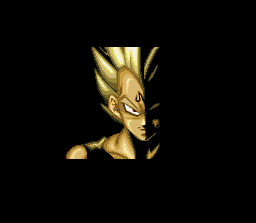
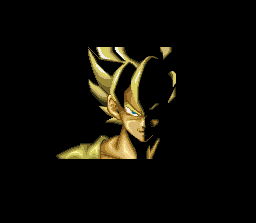
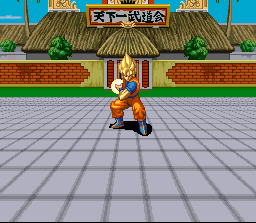
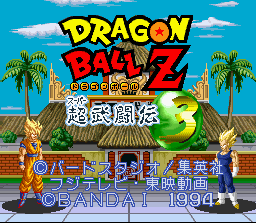 The intro was quite a show. Judging by it and the soundtrack, a potential story mode would have ended with
the battle between Goku and Vegeta as the climax and final boss of the game.
The first thing we probably did was to try and discover all of the characters' special moves, to see what they looked like (luckily, a list of the all special moves was available in-game). Especially the two super-beam attacks of each characters, of course.
Then, it would be finding out about a lot of things as we played: the dialogues adapting to the opponent sometimes, the win pose changing depending on how much health the fighters had left, etc...
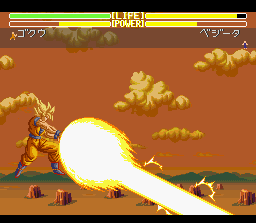
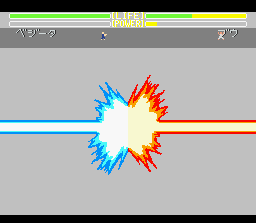
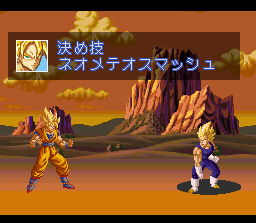 Seeing all the characters' special moves, and especially their two super-blast moves, was quite a motivation.
Two blasts meeting would prove to be quite a show, but it was actually a downgrade compared to the bigger blast-collision effect of Super Butoden 2!
The intro and outro dialogues adapting to specific characters would prove quite interesting to find out as well, often using lines from the original story.
But most of all, there were those "super secrets" that we heard about by friends or saw in magazines and that we were thrilled to try.
A secret code at the beginning unlocking Future Trunks (when the game is all set in the early Majin Boo saga). Secret codes giving the characters unusual strength, defense or both (symbolized by various colored auras suddenly appearing during the intro dialogue). One of those codes would suddenly be given by the announcer every tenth match during the ending dialogue, it was quite a shocking moment for my brother and I when we ended a battle, saw the dialogue and suddenly the character jumped off screen and the announcer's icon appeared in the speech box to say "The code is: [sequence of buttons]". And no other instruction was given than this sentence, you had to guess that it was for the intro dialogue screen by yourself!

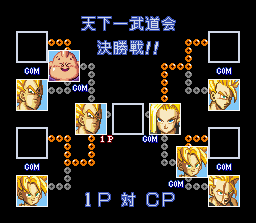
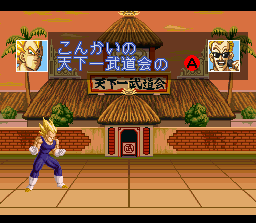 When finishing the Tenkaichi Budokai, the announcer would appear in the text box to congratulate the winner.
But what a surprise to suddenly see him at the end of regular matches, coming to just throw in an unknown sequence of buttons surrounded with mystery...
And most of all, the thrilling tests of the Supreme Move for each character, which didn't appear in the in-game list and made characters auto-perform amazing combos coupled with exclusive moves/animations!!
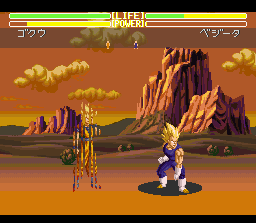
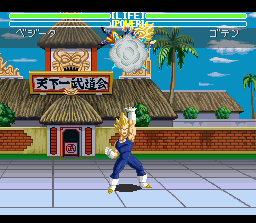 When successfully hitting an opponent with the first hit of a Supreme Move, the computer would take control of the character and make him perform a devastating combo, sometimes with exclusive sprites for exclusive moves!
The opponent would have no mean to defend against this once it started, being forced to take every single hit!
But you had to know about the secret sequence of buttons, similarly to fatalities in Mortal Kombat!
Back then, we desperately tried every possible buttons-combos to find out about Kaio Shin and C-18's Supreme Move, we were sure they must have one too!
Little did we know that the game had been rushed and Kaio Shin and C-18's Supreme Moves were never programmed (although C-18's sprites for her Supreme Moves were still in the game and accessible through the debug menu)!
Kaio Shin and C-18 also didn't have special ending big pictures (using their small character selection picture instead), which ended up hinting at us that they might have been victim of some development discrimination back then!
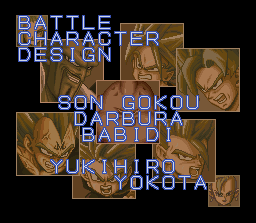
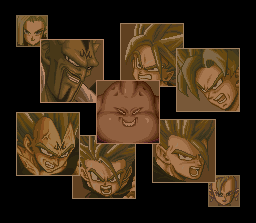
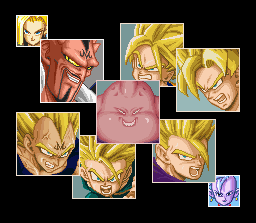 When finishing the Tenkaichi Budokai with at least one human player, ending credits would appear. But Kaio Shin and C-18 - who already lacked Supreme Moves -
had no pictures prepared for them, and the pictures used were simply their "character selection" icons.
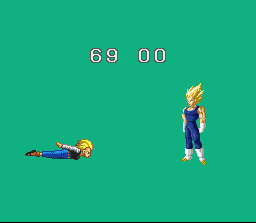
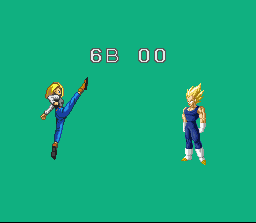
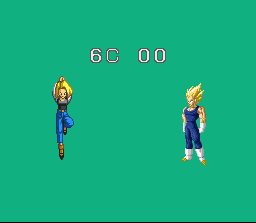
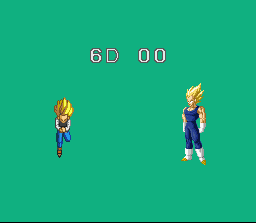
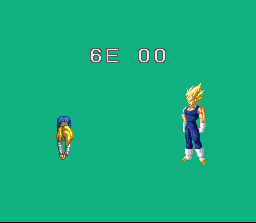
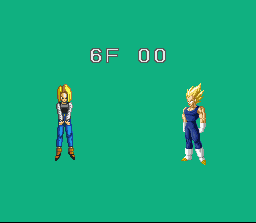 Unexpectedly, C-18's Supreme Move sprites can be found in the debug menu.
She was apparently meant to use the attack that killed Gohan in the alternative future, minus C-17.
Another secret we never found because it simply didn't exist: if Future Trunks was added as a tenth character, there had to be a tenth stage as well (on the selection screen, slots for characters would then turn into slots for landscapes selection).
But no, there is no stage for Future Trunks accessible in the end (although an unused stage featuring Piccolo turned into stone can be seen - and played - through the debug menu, no access to it was programmed in the game's natural routine).
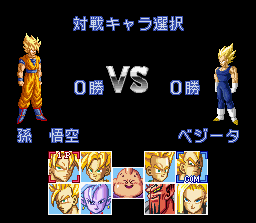
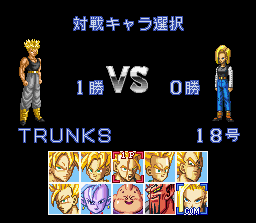
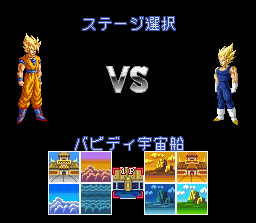
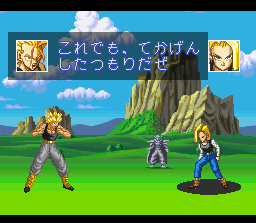 When unlocking Future Trunks (whose name is written in occidental letters), the "selection screen" would rearrange the icons into a much more logical way, as if it had always been meant to look like that.
It should have been the same for the stage selection, it seemed logical that there would be a secret stage associated with the secret characters. And yet, nope.
Incidentally, there is indeed an unused stage, which is a variation of the plains, but with Piccolo's statue. My brother and I, when finding it out through the debug menu, would further believe that the Japanese version had a story mode.
There's also an unused sprite of base form Future Trunks (probably a win pose where he was supposed to untransform), but we would have never guessed about that back then!
And to finish, a slight of hand which the characters would have used to toss away little energy blasts coming at them - this would be end up being implemented in the upcoming next SNES episode (
Hyper Dimension) instead. There's no hint of that move missing in the natural game so we couldn't have guessed that on our own either - you have to explore the debug menu to find out!
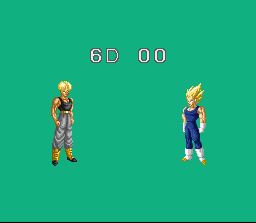
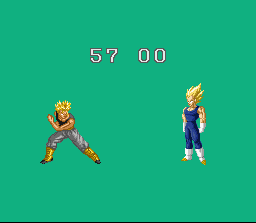
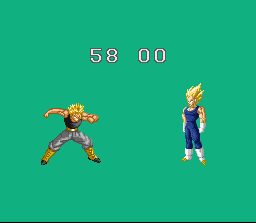
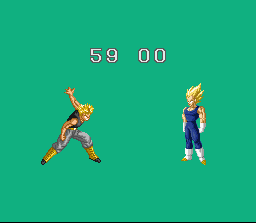 A sprite of Trunks' base form was created but never used, and a correct palette for his hair was not associated to it, ultimately making him blond in his base form.
An unused move for characters to toss away little blasts (animation composed of three sprites) would not be lost forever, since it ended up being included in the upcoming game Hyper Dimension.
Ultimately, the fact that the Debug Menu is exactly the same than the one for
Super Butoden 2 despite many options now being useless and sometimes crashing the game, proves that
Super Butoden 3 was a rushed job quickly built on the previous game ROM with minimal modifications (only the data for new characters, new landscapes, a few lines of text dialogues, and minor gameplay tweaks were implemented, and all those weren't even fully finished by the time the game was released, with missing moves, missing stages, missing pictures, story mode they hadn't start even building yet - it's all empty in the debug menu).
But back then, we were kids without access to that data, and the game was our first
Dragon Ball game and seemed complete to us, and we had a great time fighting for hours and searching for exciting secrets to unveil!

The only thing we could guess was that "Kaio Shin and C-18 are the only two characters to not have special ending pictures and not have Supreme Moves... How weird... Maybe there wasn't enough 'cardridge power' to make it for this game..."

Then, when discovering
Super Butoden 2, we would go "why didn't they do a story mode in the third, is it another hidden secret?! It wouldn't make any sense not to do it, it's gotta be a secret mode!!".
And when discovering
Hyper Dimension, which we knew had no story mode in France when the Japanese version had one, "ah, that must be the same with
Super Butoden 3, it must be on the Japanese version!! Of course, that's the only explanation!"