
Dragon Ball Z (Budokai): Difference between revisions
m fixing a broken link |
|||
| (52 intermediate revisions by 4 users not shown) | |||
| Line 13: | Line 13: | ||
| dates = 02 November 2002 <small>(EU PS2)</small><br>03 December 2002 <small>(US PS2)</small><br>13 February 2003 <small>(JP PS2)</small><br>28 November 2003 <small>(JP Gamecube)</small><br>28 January 2004 <small>(US Gamecube)</small> | | dates = 02 November 2002 <small>(EU PS2)</small><br>03 December 2002 <small>(US PS2)</small><br>13 February 2003 <small>(JP PS2)</small><br>28 November 2003 <small>(JP Gamecube)</small><br>28 January 2004 <small>(US Gamecube)</small> | ||
| genre = Fighting | | genre = Fighting | ||
| price = ¥6,800 + tax | | price = ¥6,800 + tax (JP)<br>$49.99 (US) | ||
| developer = [[Dimps]] | | developer = [[Dimps]] | ||
| producer = [[Daisuke Uchiyama]] | | producer = [[Daisuke Uchiyama]] | ||
| Line 21: | Line 21: | ||
| sold = 3 million <small>(World)</small><ref name=VGSPU3>{{Cite guidebook|Title="Video Games Selection Pick Up! 03"|Book=33|Page=pp. 186-187}}</ref> | | sold = 3 million <small>(World)</small><ref name=VGSPU3>{{Cite guidebook|Title="Video Games Selection Pick Up! 03"|Book=33|Page=pp. 186-187}}</ref> | ||
}} | }} | ||
'''''Dragon Ball Z''''', released internationally as '''''Dragon Ball Z: Budokai''''', represents the franchise's first return to fighting games since 1997's ''[[Dragon Ball: Final Bout]]''. The game's story and roster covers the Saiyan through Cell arcs of the franchise, roughly reflecting the ongoing airing of several international television | '''''Dragon Ball Z''''', released internationally as '''''Dragon Ball Z: Budokai''''', represents the franchise's first return to fighting games since 1997's ''[[Dragon Ball: Final Bout]]''. The game's story and roster covers the Saiyan through Cell arcs of the franchise, roughly reflecting the ongoing airing of several international television broadcasts. | ||
All characters and environments are rendered in a fully 3D space, with battles generally taking place on a 2D field with the occasional dynamic camera angle. In addition to basic attacks such as punches, kicks, and energy blasts, players can perform special moves via specific button combinations, as well as super moves via similar button combinations with sufficient energy gathered. | All characters and environments are rendered in a fully 3D space, with battles generally taking place on a 2D field with the occasional dynamic camera angle. In addition to basic attacks such as punches, kicks, and energy blasts, players can perform special moves via specific button combinations, as well as super moves via similar button combinations with sufficient energy gathered. | ||
Though the original three games were simply titled with the "Dragon Ball Z" moniker in Japan, the games received a "Budokai" subtitle branding internationally. This branding was subsequently used back in Japan as well as internationally for the two ''Dragon Ball Z: Shin Butoden'' games on the Sony PlayStation Portable. As such, the collective series is generally referred to as the "Budokai" game series | Though the original three games were simply titled with the "Dragon Ball Z" moniker in Japan, the games received a "Budokai" subtitle branding internationally. This branding was subsequently used back in Japan as well as internationally for the two ''Dragon Ball Z: Shin Butoden'' games on the Sony PlayStation Portable. As such, the collective series is generally referred to as the "Budokai" game series for clarity purposes. | ||
''Dragon Ball Z'' was developed by [[Dimps]], who would go on to develop additional games in the ''Dragon Ball Z'' ("Budokai") series, as well as ''[[Dragon Ball Z: Infinite World]]'', ''[[Dragon Ball Z: Burst Limit]]'', and the ''[[Dragon Ball Heroes]]'' card-based arcade game series. | ''Dragon Ball Z'' was developed by [[Dimps]], who would go on to develop additional games in the ''Dragon Ball Z'' ("Budokai") series, as well as ''[[Dragon Ball Z: Infinite World]]'', ''[[Dragon Ball Z: Burst Limit]]'', and the ''[[Dragon Ball Heroes]]'' card-based arcade game series. | ||
Planning for a new ''Dragon Ball'' game on the PlayStation 2 began as early as 2000, with an intended summer 2002 release date slipping to later that year; this placed the game squarely between the launch of the ''[[kanzenban]]'' and the first [[Dragon Box]] release in Japan, an unintended but highly beneficial timeframe.<ref name=VGSPU3 /> | Planning for a new ''Dragon Ball'' game on the PlayStation 2 began as early as 2000, with an intended summer 2002 release date slipping to later that year; this placed the game squarely between the launch of the ''[[Dragon Ball Kanzenban|kanzenban]]'' and the first [[Dragon Box]] release in Japan, an unintended but highly beneficial timeframe.<ref name=VGSPU3 /> | ||
==Gameplay== | ==Gameplay== | ||
[[File:BudokaiGameplayPic1.png|320px|thumb|right|Goku unleashes a Kamehameha blast against Piccolo.]] | |||
''Dragon Ball Z'' also utilizes a customization system, which allows players to equip characters with up to | Unlike prior ''Dragon Ball'' fighting games, combat in ''Dragon Ball Z'' is not limited to two-dimensional space, with players able to sidestep around their opponents to position and avoid attacks. Standard attacks are divided between guarding as well as punch, kick, and energy attacks, which each receiving a designated button on the controller. Each player also has an energy meter, which can either be charged manually or increased by attacking the opponent. Players can trigger a transformation or execute special attacks by inputting the correct sequence of commands, provided the player has enough energy. | ||
''Dragon Ball Z'' also utilizes a customization system, which allows players to equip characters with up to seven "Capsules" that grant new abilities such as special attacks and transformations. Capsules are divided into three categories: "Ability" (能力), "Physical" (体術), and "Support" (能力). The strength of certain capsules can be increased by attaching multiple to the character. Capsules are able to be traded between players using the PlayStation 2 or Gamecube's Memory Card. | |||
===Game Modes=== | ===Game Modes=== | ||
* '''Story | * '''Story''' (ストーリー ''Sutōrī''): Fight across the story of Dragon Ball Z from the Saiyan arc to Cell arc, along with special "What-If" side stories. | ||
* '''Duel | * '''Duel''' (対戦 ''Taisen''): Fight against another player/computer, or watch two computers fight each other. | ||
* '''World Tournament | * '''World Tournament''' (天下一武道会 ''Tenka'ichi Budōkai''): Fight your way up a tournament bracket to become World Martial Arts champion and earn prizes. | ||
* '''Practice | * '''Practice''' (練習 ''Renshū''): Practice your skills in the game. | ||
* ''' | * '''Edit Skills''' (スキル編集 ''Sukiru Henshū''): Attach skill capsules to fighters to grant new moves and transformations. | ||
* '''Legend of Mr. Satan | * '''Options''' (オプション ''Opushon''): Change the game settings. | ||
* '''Legend of Mr. Satan''' (''LEGEND of Mr.Satan''): Defeat all the fighters at the Cell Games as Mr. Satan while undergoing a gauntlet of different handicaps. | |||
==Story== | ==Story== | ||
''Dragon Ball Z'' includes a story mode following the events of the ''Dragon Ball Z'' series starting from the arrival of [[Raditz]] to the destruction of [[Cell]]. Story cutscenes are rendered fully in-engine, rather than being pre-rendered, and feature full voice acting. Story sequences are divided into episodes, which mimic the series with title cards to open each act, and occasionally utilize the narrator to review what occurred in the previous episode. | |||
Also included in the story mode are special "What If?" scenarios, which have the player experience the story from the villain's point of view, often leading to different story outcomes. | |||
===Saiyan Arc=== | ===Saiyan Arc=== | ||
| Line 60: | Line 68: | ||
|- | |- | ||
! scope="row" | 2 | ! scope="row" | 2 | ||
|[[File:SaiyanArcEpisodeNo2 Budokai1.png|80px|center]]||'' | |[[File:SaiyanArcEpisodeNo2 Budokai1.png|80px|center]]||''共通の大敵''<br>'''A Mutually Deadly Foe'''||'''Battles:'''<br>Piccolo vs. Raditz | ||
|- | |- | ||
! scope="row" | 3 | ! scope="row" | 3 | ||
|[[File:SaiyanArcNo3 Budokai1.png|80px|center]]||'' | |[[File:SaiyanArcNo3 Budokai1.png|80px|center]]||''サイヤ人、来襲!!''<br>'''Saiyan Attack!!'''||'''Battles:'''<br>Piccolo vs. Saibaimen (x6)<br>Piccolo vs. Nappa | ||
|- | |- | ||
! scope="row" | 4 | ! scope="row" | 4 | ||
| Line 69: | Line 77: | ||
|- | |- | ||
! scope="row" | 5 | ! scope="row" | 5 | ||
|[[File:SaiyanArcNo5 Budokai1.png|80px|center]]||'' | |[[File:SaiyanArcNo5 Budokai1.png|80px|center]]||''天下分け目の超決戦!!''<br>'''Super Duel'''||'''Battles:'''<br>Goku vs. Vegeta | ||
|- | |- | ||
! scope="row" | 6 | ! scope="row" | 6 | ||
| Line 75: | Line 83: | ||
|- | |- | ||
! scope="row" | 7 | ! scope="row" | 7 | ||
|[[File:SaiyanArcNo7 Budokai1.png|80px|center]]||'' | |[[File:SaiyanArcNo7 Budokai1.png|80px|center]]||''サイヤ人の王子、ベジータ''<br>'''Vegeta, Saiyan Prince'''||''Special 'What-If' episode, depicting the scenario where Vegeta defeats Earth's fighters. Health does not recover between matches. Ends with Vegeta turning Super Saiyan after being enraged by Yajirobe.''<br>'''Battles:'''<br>Vegeta vs. Goku<br>Vegeta vs. Kuririn<br>Vegeta vs. Gohan | ||
|- | |- | ||
|} | |} | ||
| | ||
===Namek Arc=== | ===Namek Arc=== | ||
| Line 89: | Line 98: | ||
|- | |- | ||
! scope="row" | 1 | ! scope="row" | 1 | ||
|[[File:BudokaiNamekEp1.png|80px|center]]||'' | |[[File:BudokaiNamekEp1.png|80px|center]]||''いざナメック星へ!''<br>'''Let's Go to Namek!'''||''Players go through a series of trials that aim to teach core game mechanics as Goku approachs Namek. Ends with battle against a 'virtual' Vegeta'''''<br>Battles:'''<br>Goku vs. Vegeta | ||
|- | |- | ||
! scope="row" | 2 | ! scope="row" | 2 | ||
| Line 98: | Line 107: | ||
|- | |- | ||
! scope="row" | 4 | ! scope="row" | 4 | ||
|[[File:BudokaiNamekEp4.png|80px|center]]||'' | |[[File:BudokaiNamekEp4.png|80px|center]]||''超サイヤ人への道''<br>'''The Road to Super Saiyan'''||'''Battles:'''<br>Vegeta vs. Freeza (First Form) | ||
|- | |- | ||
! scope="row" | 5 | ! scope="row" | 5 | ||
|[[File:BudokaiNamekEp5.png|80px|center]]||'' | |[[File:BudokaiNamekEp5.png|80px|center]]||''フリーザか!ベジータか!''<br>'''Freeza? Or Vegeta?'''||'''Battles:'''<br>Vegeta vs. Freeza (Final Form) | ||
|- | |- | ||
! scope="row" | 6 | ! scope="row" | 6 | ||
| Line 107: | Line 116: | ||
|- | |- | ||
! scope="row" | 7 | ! scope="row" | 7 | ||
|[[File:BudokaiNamekEp7.png|80px|center]]||'' | |[[File:BudokaiNamekEp7.png|80px|center]]||''伝説の超サイヤ人''<br>'''The Legendary Super Saiyan'''||'''Battles:'''<br>Goku (Super Saiyan) vs. Freeza (Final Form) | ||
|- | |- | ||
! scope="row" | 8 | ! scope="row" | 8 | ||
| Line 113: | Line 122: | ||
|- | |- | ||
! scope="row" | 9 | ! scope="row" | 9 | ||
|[[File:BudokaiNamekEp9.png|80px|center]]||'' | |[[File:BudokaiNamekEp9.png|80px|center]]||''怒るフリーザさま''<br>'''Raging Freeza'''||''Special story scenario depicting Freeza's battles on Namek from his perspective''<br>'''Battles:'''<br>Freeza vs. Gohan<br>Freeza vs. Piccolo<br>Freeza (Final Form) vs. Vegeta | ||
|- | |- | ||
! scope="row" | 10 | ! scope="row" | 10 | ||
|[[File:BudokaiNamekEp10.png|80px|center]]||'' | |[[File:BudokaiNamekEp10.png|80px|center]]||''真の支配者''<br>'''The True Ruler'''||''Special 'What-If' episode depicting the scenario where Freeza defeats Goku on Namek''<br>'''Battles:'''<br>Freeza (100% Final Form) vs. Goku (Super Saiyan) | ||
|- | |- | ||
|} | |} | ||
| Line 131: | Line 140: | ||
|- | |- | ||
! scope="row" | 1 | ! scope="row" | 1 | ||
|[[File:BudokaiCellArcEp1.png|80px|center]]||'' | |[[File:BudokaiCellArcEp1.png|80px|center]]||''新たなる脅威''<br>'''A New Threat'''||'''Battles:'''<br>Goku (Super Saiyan) vs. Artifical Human No. 19 | ||
|- | |- | ||
! scope="row" | 2 | ! scope="row" | 2 | ||
| Line 137: | Line 146: | ||
|- | |- | ||
! scope="row" | 3 | ! scope="row" | 3 | ||
|[[File:BudokaiCellArcEp3.png|80px|center]]||'' | |[[File:BudokaiCellArcEp3.png|80px|center]]||''邪悪な予感''<br>'''A Wicked Omen'''||'''Battles:'''<br>Piccolo vs. Cell | ||
|- | |- | ||
! scope="row" | 4 | ! scope="row" | 4 | ||
| Line 143: | Line 152: | ||
|- | |- | ||
! scope="row" | 5 | ! scope="row" | 5 | ||
|[[File:BudokaiCellArcEp5.png|80px|center]]||'' | |[[File:BudokaiCellArcEp5.png|80px|center]]||''ベジータに自信あり!''<br>'''Vegeta's Confidence'''||'''Battles:'''<br>Super Vegeta vs. Cell (Second Form) | ||
|- | |- | ||
! scope="row" | 6 | ! scope="row" | 6 | ||
| Line 149: | Line 158: | ||
|- | |- | ||
! scope="row" | 7 | ! scope="row" | 7 | ||
|[[File:BudokaiCellArcEp7.png|80px|center]]||'' | |[[File:BudokaiCellArcEp7.png|80px|center]]||''セルゲーム 始まる''<br>'''Cell's Game begins'''||'''Battles:'''<br>Goku (Super Saiyan) vs. Cell (Perfect) | ||
|- | |- | ||
! scope="row" | 8 | ! scope="row" | 8 | ||
| Line 155: | Line 164: | ||
|- | |- | ||
! scope="row" | 9 | ! scope="row" | 9 | ||
|[[File:BudokaiCellArcEp9.png|80px|center]]||'' | |[[File:BudokaiCellArcEp9.png|80px|center]]||''孫悟飯爆発!!''<br>'''Gohan Explodes!!'''||'''Battles:'''<br>Gohan (Super Saiyan 2) vs. Cell Jr. (x7)<br>Gohan (Super Saiyan 2) vs. Cell (Perfect) | ||
|- | |- | ||
! scope="row" | 10 | ! scope="row" | 10 | ||
| Line 176: | Line 185: | ||
||[[File:GokuPortraitBudokai1.png]]||[[Son Goku]]||[[Kaio-Ken x2]]<br>[[Kaio-Ken x5]]<br>[[Kaio-Ken x10]]<br>[[Super Saiyan]]||[[Kamehameha]]<br>[[Teleportation Kamehameha]]<br>[[Rapid Fire Kamehameha]]<br>[[Genki-Dama]]<br>Zanku-Fist<br>Dragon Throw<br>Super Dragon Fist||Immediately Available | ||[[File:GokuPortraitBudokai1.png]]||[[Son Goku]]||[[Kaio-Ken x2]]<br>[[Kaio-Ken x5]]<br>[[Kaio-Ken x10]]<br>[[Super Saiyan]]||[[Kamehameha]]<br>[[Teleportation Kamehameha]]<br>[[Rapid Fire Kamehameha]]<br>[[Genki-Dama]]<br>Zanku-Fist<br>Dragon Throw<br>Super Dragon Fist||Immediately Available | ||
|- | |- | ||
||[[File:SonGohanPortraitBudokai.png]]||[[Son Gohan]]||Potential Unlocked<br> | ||[[File:SonGohanPortraitBudokai.png]]||[[Son Gohan]]<br>(Saiyan Arc)||Potential Unlocked||Kamehameha<br>Masenkō<br>Continuous Ki Wave<br>Fierce Demon Kill <br>Hurricane Kick'''||Immediately Available | ||
|- | |- | ||
||[[File:PiccoloPortraitBudokai.png]]||[[Piccolo]]||Fuse with Nail<br>Fuse with Kami|| | ||[[File:PiccoloPortraitBudokai.png]]||[[Piccolo]]||Fuse with Nail<br>Fuse with Kami||[[Gekiretsukodan]]<br>Explosive Magic Wave<br>[[Makankōsappō]]<br>[[Makūhōidan]]<br>Instant Fierce Demon Kill<br>Flying Demon Kick<br>Fierce Demon Rampage||Immediately Available | ||
|- | |- | ||
||[[File:TenshinhanPortraitBudokai.png]]||[[Tenshinhan]]||-||[[Kikōhō]]<br>[[Dodonpa]]<br>Volleyball Fist<br>Consecutive Fist<br>Machine Gun Fist||Immediately Available | ||[[File:TenshinhanPortraitBudokai.png]]||[[Tenshinhan]]||-||[[Kikōhō]]<br>[[Dodonpa]]<br>Volleyball Fist<br>Consecutive Fist<br>Machine Gun Fist||Immediately Available | ||
| Line 184: | Line 193: | ||
||[[File:KuririnPortraitBudokai.png]]||[[Kuririn]]||Potential Unlocked||[[Kamehameha]]<br>[[Kienretsuzan]]<br>Zanku-Fist<br>Fierce Continuous Fist<br>Continuous Strike||Immediately Available | ||[[File:KuririnPortraitBudokai.png]]||[[Kuririn]]||Potential Unlocked||[[Kamehameha]]<br>[[Kienretsuzan]]<br>Zanku-Fist<br>Fierce Continuous Fist<br>Continuous Strike||Immediately Available | ||
|- | |- | ||
||[[File:YamchaPortraitBudokai.png]]||[[Yamcha]]||-||Kamehameha<br>Wolf Fang Fist<br>Wolf Fang Ki Blast<br>Wolf Slice Fist<br>Tiger Strike|| | ||[[File:YamchaPortraitBudokai.png]]||[[Yamcha]]||-||Kamehameha<br>Wolf Fang Fist<br>Wolf Fang Ki Blast<br>Wolf Slice Fist<br>Tiger Strike||Complete Artificial Human Arc story mission #12 | ||
|- | |- | ||
||[[File:VegetaPortraitBudokai.png]]||[[Vegeta]]||[[Super Saiyan]]<br>Super Vegeta||Galic Cannon<br>Final Flash<br>Big Bang Attack<br>Final Bride<br>Meteor Flash<br>Nosedive Crash<br>Meteor Break|| | ||[[File:VegetaPortraitBudokai.png]]||[[Vegeta]]||[[Super Saiyan]]<br>Super Vegeta||Galic Cannon<br>Final Flash<br>Big Bang Attack<br>Final Bride<br>Meteor Flash<br>Nosedive Crash<br>Meteor Break||Complete Saiyan Arc story mission #6 | ||
|- | |- | ||
||[[File:RaditzPortraitBudokai.png]]||[[Raditz]]||-||Double Sunday<br>Saturday Crush<br>Exciting Year<br>Weekly Special<br>Day Crush<br>Dynamite Monday|| | ||[[File:RaditzPortraitBudokai.png]]||[[Raditz]]||-||Double Sunday<br>Saturday Crush<br>Exciting Year<br>Weekly Special<br>Day Crush<br>Dynamite Monday||Complete Saiyan Arc story mission #1 | ||
|- | |- | ||
||[[File:NappaPortraitBudokai.png]]||[[Nappa]]||-||Break Cannon<br>Deluxe Bomber<br>Giant Attack<br>Megaton Throw<br>Breakstorm|| | ||[[File:NappaPortraitBudokai.png]]||[[Nappa]]||-||Break Cannon<br>Deluxe Bomber<br>Giant Attack<br>Megaton Throw<br>Breakstorm||Complete Saiyan Arc story mission #4 | ||
|- | |- | ||
||[[File:DodoriaPortraitBudokai.png]]||[[Dodoria]]||-||Dodoria Beam<br>Dodoria Ultra Spike<br>Dodoria Big Blaster<br>Dodoria Typhoon|| | ||[[File:DodoriaPortraitBudokai.png]]||[[Dodoria]]||-||Dodoria Beam<br>Dodoria Ultra Spike<br>Dodoria Big Blaster<br>Dodoria Typhoon||Complete Namek Arc story mission #2 | ||
|- | |- | ||
||[[File:ZarbonPortraitBudokai.png]]||[[Zarbon]]||Monster Form||Possibile Cannon<br>Hyper Elegant Magnum<br>Super Beautiful Arrow<br>Missing Screw<br>Extra Graceful Cannon || | ||[[File:ZarbonPortraitBudokai.png]]||[[Zarbon]]||Monster Form||Possibile Cannon<br>Hyper Elegant Magnum<br>Super Beautiful Arrow<br>Missing Screw<br>Extra Graceful Cannon ||Complete Namek Arc story mission #2 | ||
|- | |- | ||
||[[File:ReacoomPortraitBudokai.png]]||[[Reacoom]]||-||Reacoom Eraser Gun<br>Reacoom Bomber<br>Reacoom Buster Magnum<br>Reacoom Maximum Vulcan<br>Reacoom Hyper Swing<br>Special Fighting Pose 3<br>Special Fighting Pose 4|| | ||[[File:ReacoomPortraitBudokai.png]]||[[Reacoom]]||-||Reacoom Eraser Gun<br>Reacoom Bomber<br>Reacoom Buster Magnum<br>Reacoom Maximum Vulcan<br>Reacoom Hyper Swing<br>Special Fighting Pose 3<br>Special Fighting Pose 4||Complete Namek Arc story mission #3 | ||
|- | |- | ||
||[[File:GinyuPortraitBudokai.png]]||[[Captain Ginyu]]||-||Milky Cannon<br>Body Change<br>Processed Power Crush<br>Parmesan Shower<br>Ginyu Strike<br>Ginyu Special<br>Special Fighting Pose 1<br>Special Fighting Pose 2|| | ||[[File:GinyuPortraitBudokai.png]]||[[Captain Ginyu]]||-||Milky Cannon<br>Body Change<br>Processed Power Crush<br>Parmesan Shower<br>Ginyu Strike<br>Ginyu Special<br>Special Fighting Pose 1<br>Special Fighting Pose 2||Complete Namek Arc story mission #3 | ||
|- | |- | ||
||[[File:FreezaPortraitBudokai.png]]||[[Freeza]]||Final Form<br>100% Power<br>Mecha-Freeza||Death Beam<br>Death Ball<br>Killer Ball<br>Freeza Nightmare<br>Meteor Crash<br>Evil Dance|| | ||[[File:FreezaPortraitBudokai.png]]||[[Freeza]]||Final Form<br>100% Power<br>Mecha-Freeza||Death Beam<br>Death Ball<br>Killer Ball<br>Freeza Nightmare<br>Meteor Crash<br>Evil Dance||Complete Namek Arc story mission #8 | ||
|- | |- | ||
||[[File:FutureTrunksPortraitBudokai.png]]||[[Trunks]]||Super Saiyan<br>Super Trunks<br>Super Trunks 2||Buster Cannon<br>Finish Buster<br>Burning Attack<br>Blast Attack<br>Energy Burst<br>Rapid Fall Slash<br>Meteor Break|| | ||[[File:FutureTrunksPortraitBudokai.png]]||[[Trunks]]||Super Saiyan<br>Super Trunks<br>Super Trunks 2||Buster Cannon<br>Finish Buster<br>Burning Attack<br>Blast Attack<br>Energy Burst<br>Rapid Fall Slash<br>Meteor Break||Complete Artificial Human Arc story mission #6 | ||
|- | |- | ||
||[[File:No19PortraitBudokai.png]]||[[No. 19]]||-||Photon Shot<br>Drain Life<br>Power Break<br>Rolling Crush<br>Cybernetic Pain|| | ||[[File:No19PortraitBudokai.png]]||[[No. 19]]||-||Photon Shot<br>Drain Life<br>Power Break<br>Rolling Crush<br>Cybernetic Pain||Complete Artificial Human Arc story mission #2 | ||
|- | |- | ||
||[[File:No18PortraitBudokai.png]]||[[No. 18]]||-||Power Blitz<br>Energy Field<br>Power Strike<br>Power Falling Star<br>Buster Swing|| | ||[[File:No18PortraitBudokai.png]]||[[No. 18]]||-||Power Blitz<br>Energy Field<br>Power Strike<br>Power Falling Star<br>Buster Swing||Complete Artificial Human Arc story mission #2 | ||
|- | |- | ||
||[[File:No17PortraitBudokai.png]]||[[No. 17]]||-||Power Blitz<br>Energy Field<br>Power Strike<br>Power Falling Star<br>Buster Swing|| | ||[[File:No17PortraitBudokai.png]]||[[No. 17]]||-||Power Blitz<br>Energy Field<br>Power Strike<br>Power Falling Star<br>Buster Swing||Complete Artificial Human Arc story mission #4 | ||
|- | |- | ||
||[[File:No16PortraitBudokai.png]]||[[No. 16]]||-||Rocket Punch<br>Hell Flash<br>Devil Crush<br>Killing Neck Throw<br>Finishing Splash|| | ||[[File:No16PortraitBudokai.png]]||[[No. 16]]||-||Rocket Punch<br>Hell Flash<br>Devil Crush<br>Killing Neck Throw<br>Finishing Splash||Complete Artificial Human Arc story mission #11 | ||
|- | |- | ||
||[[File: | ||[[File:GohanCellArcBudokaiPortrait.png]]||[[Son Gohan]]<br>(Cell Arc)||[[Super Saiyan]]<br>[[Super Saiyan 2]]||Kamehameha<br>Super Kamehameha<br>Rapid Fire Shot<br>Instant Fierce Demon Kill<br>Fierce Demon Rampage<br>Continuous Strike||Complete Artificial Human Arc story mission #8 | ||
|- | |- | ||
||[[File:MrSatanPortraitBudokai.png]]||[[Mr. Satan]]||High Tension||Dynamite Kick<br>Satan Special<br>Present For You<br>Satan Critical Attack<br>Satan Miracle Bomber<br>Satan Ultra Dynamite|| | ||[[File:CellPortraitBudokai.png]]||[[Cell]]||Second Form<br>Perfect Form<br>Perfect Form (Power)||[[Kamehameha]]<br>Ultimate Attack<br>[[Genki-Dama]]<br>Negative Power Rain<br>Cybernetic Raider<br>Lasso||Complete Artificial Human Arc story mission #10 | ||
|- | |||
||[[File:MrSatanPortraitBudokai.png]]||[[Mr. Satan]]||High Tension||Dynamite Kick<br>Satan Special<br>Present For You<br>Satan Critical Attack<br>Satan Miracle Bomber<br>Satan Ultra Dynamite||Win Intermediate Class Tournament | |||
|- | |||
||[[File:GreatSaiyamanBudokaiPortrait.png]]||[[Great Saiyaman]]||-||Justice Punch<br>Justice Kick<br>Justice Flash<br>Justice Finisher<br>Justice Carnival<br>Justice Dynamite||Win Advanced Class Tournament | |||
|- | |||
|} | |||
==Non-Selectable Characters== | |||
These characters are not playable in the game through regular means. | |||
{| class="wikitable" style="width: 100%; min-width:50%; margin: 1em auto 1em auto;" align="center" | |||
!Portrait!!Name!!Techniques!!Status | |||
|- style="border-top: 2px solid #AAA" | |||
||[[File:SaibaimenPortraitBudokai1.png]]||[[Saibaiman]]||Dissolving Liquid<br>Pumpkin Crush<br>Gatling Carrot||Non-Playable | |||
|- | |||
||[[File:CellJrPortraitBudokai1.png]]||[[Cell Jr.]]||Kamehameha<br>Ultimate Attack<br>Machine Gun Attack<br>Cybernetic Shooter||Alternate "Cell with Kuririn absorbed" skin playable during Artificial Human Arc Mission #12. | |||
|- | |- | ||
|} | |} | ||
==Stages== | ==Stages== | ||
The following list is presented in the order available on the stage select screen, with the original Japanese names followed by the English localization's name in parenthesis. | |||
{| class="wikitable" style="width: 100%;" align="center" | {| class="wikitable" style="width: 100%;" align="center" | ||
!Icon!!Name!!Status | !Icon!!Name!!Status | ||
|- style="border-top: 2px solid #AAA" | |- style="border-top: 2px solid #AAA" | ||
||[[File: | ||[[File:CellGamesPortraitBudokai.png|160px]]||セルリング<br>''Seru Ringu''<br>'''Cell Ring'''<br>("Cell Games Ring")||- | ||
|- | |- | ||
||[[File: | ||[[File:NamekPortraitBudokai.png|160px]]||ナメック星<br>''Namekku-sei''<br>'''[[Planet Namek]]'''<br>("Planet Namek")||- | ||
|- | |- | ||
||[[File: | ||[[File:CanyonPortraitBudokai.png|160px]]||山間平野<br>''Sankan Heiya''<br>'''Mountain Plateau'''<br>("Valley Plains")||- | ||
|- | |- | ||
||[[File: | ||[[File:WMATPortraitBudokai.png|160px]]||天下一武道会<br>''Tenka'ichi Budōkai''<br>'''Number One Under the Heavens Martial Arts Tournament'''<br>("World Tournament")||Immediately Selectable | ||
|- | |- | ||
||[[File: | ||[[File:GrasslandsPortraitBudokai.png|160px]]||牧草地<br>''Bokusō-chi''<br>'''Grassland'''<br>("Grassland")||Immediately Selectable | ||
|- | |- | ||
||[[File: | ||[[File:ROSATPortraitBudokai.png|160px]]||精神と時間の部屋<br>''Seishin to Jikan no Heya''<br>'''[[Room of Spirit and Time]]'''<br>("Hyperbolic Time Chamber")||Immediately Selectable | ||
|- | |- | ||
||[[File: | ||[[File:CanyonPortraitBudokai.png|160px]]||岩山<br>''Iwayama''<br>'''Rocky Hills'''<br>("Rock Mountain")||- | ||
|- | |||
||[[File:IslandsPortraitBudokai.png|160px]]||列島<br>''Rettō''<br>'''Archipelago'''<br>("Islands")||- | |||
|- | |- | ||
||[[File:LookoutPortraitBudokai.png|160px]]||神の神殿<br>''Kami no Shinden''<br>'''[[God's Temple]]'''<br>("Kami's Lookout")||- | |||
||[[File:LookoutPortraitBudokai.png|160px]]||[[God's Temple]]||- | |||
|- | |- | ||
|} | |} | ||
| Line 250: | Line 276: | ||
==Theme Song== | ==Theme Song== | ||
''Dragon Ball Z'''s opening sequence | ''Dragon Ball Z'''s opening sequence features an in-game 3D rendering of "[[CHA-LA HEAD-CHA-LA]]", accompanied by the original version of the song itself performed by [[Hironobu Kageyama]]. While the opening animation was kept intact in America, the song was swapped to the 1996 [[FUNimation]] ''Dragon Ball Z'' English dub opening theme, "[[Rock the Dragon]]". | ||
==Soundtrack== | ==Soundtrack== | ||
The game's soundtrack was composed and arranged by [[Kenji Yamamoto]]. | The game's original soundtrack was composed and arranged by [[Kenji Yamamoto]]. Recordings were spread across two sessions, one in Tokyo, Japan and another in the United States in Los Angeles, California. The L.A recording sessions included collaboration from guitarist Steve Lukather, drummer Simon Phillips, and bass player Mike Porcaro of American Rock Band ''Toto''. | ||
HD Collection re-release | ===HD Collection=== | ||
The game's original soundtrack was completely replaced in the game's 2012 re-release in the ''[[Dragon Ball Z: Budokai HD Collection]]'' following allegations of plagiarism and Kenji Yamamoto's removal from the franchise.<ref>{{Cite web|URL=https://www.kanzenshuu.com/features/kenji-yamamoto-retrospective/|Website=Kanzenshuu|Title="Kenji Yamamoto Retrospective"|AccessDate=27 April 2020}}</ref> | |||
==Packaging== | ==Packaging== | ||
[[File:Budokai1_instructionbook_ps2_jp.png|thumb|250px|''Dragon Ball Z'' PlayStation 2 edition instruction manual]] | [[File:Budokai1_instructionbook_ps2_jp.png|thumb|250px|''Dragon Ball Z'' PlayStation 2 edition instruction manual]] | ||
Each territory received different cover artwork. America received | Each territory's respective release received different cover artwork. America received red-toned cover featuring [[Super Saiyan]] [[Son Goku]], [[Son Gohan]], [[Piccolo]], [[Vegeta]], and [[Cell]]. Europe received a non-Super Saiyan Son Goku holding ''[[Nyoibō]]'' with a series of blue-toned characters lining the bottom (including [[Spopovitch]], who does not appear in the game). Japan received an original illustration of Super Saiyan Son Goku; though only a portion of Goku's top half is present on the cover, a complete illustration was produced.<ref>{{Cite guidebook|Title="Video Games Selection Pick Up! 03"|Book=33|Page=p. 187}}</ref> | ||
The Japanese version's instruction manual, both on the PlayStation 2 and Gamecube, is stylized to resemble a classic ''Dragon Ball'' ''[[Dragon Ball Tankōbon|tankōbon]]'' cover. | The Japanese version's instruction manual, both on the PlayStation 2 and Gamecube, is stylized to resemble a classic ''Dragon Ball'' ''[[Dragon Ball Tankōbon|tankōbon]]'' cover. | ||
| Line 338: | Line 366: | ||
===PlayStation 2=== | ===PlayStation 2=== | ||
[[File:VG_Dragon_Ball_Z_Cover.png|thumb|200px|Original Japanese Sony PlayStation 2 cover]] | [[File:VG_Dragon_Ball_Z_Cover.png|thumb|200px|Original Japanese Sony PlayStation 2 cover]] | ||
''Dragon Ball Z'' was initially released | ''Dragon Ball Z'' was initially released for the Sony PlayStation 2 on '''13 February 2003''' in Japan, nearly 3 months after its international release in Europe and North America. | ||
===Nintendo Gamecube=== | ===Nintendo Gamecube=== | ||
| Line 346: | Line 374: | ||
===International Releases=== | ===International Releases=== | ||
The American and European markets provided additional, ongoing success to Bandai and associated parties throughout the | The American and European markets provided additional, ongoing success to Bandai and associated parties throughout the life cycle of the Sony PlayStation 2; all three games in the ''Dragon Ball Z'' mainline series released internationally ahead of their own domestic, Japanese release. These international editions took on the "Budokai" subtitle. All three main territories received different cover artwork, as well. | ||
===Jump Festa 2003=== | ===Jump Festa 2003=== | ||
| Line 354: | Line 382: | ||
==Domestic Media Coverage== | ==Domestic Media Coverage== | ||
* TBD | * TBD | ||
== | ===Press Releases=== | ||
* [https://www.bandai.co.jp/releases/images/3/6323.pdf ''PlayStation 2 exlusive software "Dragon Ball Z" launches in 20 countries around the world'', Bandai Co. '''11 December 2002'''] | |||
* [https://www.bandai.co.jp/releases/images/3/7403.pdf ''New game software "Dragon Ball Z" Topped 1.94 million in 20 countries'', Bandai Co. '''17 February 2003'''] | |||
===Promotions=== | |||
[https://www. | To promote the release of ''Dragon Ball Z'' in Japan, [[Bandai]] offered a ''Dragon Ball Z Display Contest'', tasking stores with designing and crafting their own custom store display units for the game. Out of 368 participating stores, two were selected for their displays. These stores were ''Kid's Land'' (キッズランド) in Ishikawa Prefecture, Japan, and Nishidaya Settsu Tomita (ニシダヤ摂津富田店様) in Osaka Prefecture, Japan.<ref>{{Cite web|URL=https://web.archive.org/web/20031217110525fw_/http://www.bandaigames.channel.or.jp/list/dbz/contest_top.html|Website=Dragon Ball Z - Bandai Games|Title="Dragon Ball Z - Contest"|Date=24 March 2003|AccessDate=14 May 2020}}</ref> | ||
==Commercials & Trailers== | |||
[https://www.youtube.com/watch?v=dIr_12edv7g Dragon Ball Z: Budokai - TV CM 2] | * [https://www.youtube.com/watch?v=5VxPWHhh66s Dragon Ball Z - Official DVD Promotional Preview (JPN)] | ||
* [https://www.youtube.com/watch?v=dmvRLF5ud-A Dragon Ball Z - TV CM 1 & 2 (JPN)] | |||
* [https://www.youtube.com/watch?v=t1O-_rEW000 Dragon Ball Z: Budokai - TV CM 1] | |||
* [https://www.youtube.com/watch?v=dIr_12edv7g Dragon Ball Z: Budokai - TV CM 2] | |||
==International Media Coverage== | ==International Media Coverage== | ||
| Line 376: | Line 408: | ||
==Legacy== | ==Legacy== | ||
Alongside the third game, the first ''Dragon Ball Z'' was included as part of the ''[[Dragon Ball Z: Budokai HD Collection]]'' in November 2012 in America and Europe; Japan did not receive a localized release. Aside from "Rock the Dragon" being kept as the opening theme song, the game's entire soundtrack was replaced. The HD Collection also retained some censorship previously only seen in the European edition of the game.<ref>{{Cite web|URL=http://www.kanzenshuu.com/2012/11/14/dragon-ball-z-budokai-hd-collection-contains-new-censorship/|Website=Kanzenshuu|Title="Dragon Ball Z: Budokai HD Collection Contains New Censorship"|Date=14 November 2012|AccessDate=26 September 2018}}</ref> | Alongside the third game, the first ''Dragon Ball Z'' was included as part of the ''[[Dragon Ball Z: Budokai HD Collection]]'' in November 2012 in America and Europe; Japan did not receive a localized release of this collection. Aside from "Rock the Dragon" being kept as the opening theme song, the game's entire soundtrack was replaced. The HD Collection also retained some censorship previously only seen in the European edition of the game.<ref>{{Cite web|URL=http://www.kanzenshuu.com/2012/11/14/dragon-ball-z-budokai-hd-collection-contains-new-censorship/|Website=Kanzenshuu|Title="Dragon Ball Z: Budokai HD Collection Contains New Censorship"|Date=14 November 2012|AccessDate=26 September 2018}}</ref> | ||
==Additional Notes== | ==Additional Notes== | ||
| Line 387: | Line 419: | ||
Bandai's advertisements for the game went for a sense of speed with characters like Freeza and Cell, and used a minimalist approach in its posters; it had been some time since ''Dragon Ball'' was in the public consciousness, so they saw this as fanning the anticipation among people ahead of the game's release. Some advertisements that focused on ideas that would create an impact and strike but were ultimately not used included a black-and-white close up of hands doing the Kamehameha, as well as a mock quiz asking readers to fill in the box for the missing part of a bowl of rice (representing "Gohan") pointing to an empty space and then pointing down to to bread (representing "Pan").<ref name=VGSPU3 /> | Bandai's advertisements for the game went for a sense of speed with characters like Freeza and Cell, and used a minimalist approach in its posters; it had been some time since ''Dragon Ball'' was in the public consciousness, so they saw this as fanning the anticipation among people ahead of the game's release. Some advertisements that focused on ideas that would create an impact and strike but were ultimately not used included a black-and-white close up of hands doing the Kamehameha, as well as a mock quiz asking readers to fill in the box for the missing part of a bowl of rice (representing "Gohan") pointing to an empty space and then pointing down to to bread (representing "Pan").<ref name=VGSPU3 /> | ||
==Trivia and Easter Eggs== | |||
===World Tournament Audience=== | |||
[[File:Budokai1StadiumCrowd.png|thumb|300px|Stadium crowd from the tournament arena stage]] | |||
Hidden in the crowd of the tournament arena stage are references and cameos from other works of [[Akira Toriyama]], including [[Arale Norimaki]] and [[Gatchan]] from ''[[Dr. Slump]]'', and Toriyama's self-insert avatar [[Robotoriyama]]. Also seen in the crowd are what appears to be references to the series ''One Piece'': one audience member features a straw hat resembling that of main character Monkey D. Luffy, while another character resembles Sanji with blonde hair covering one eye, a black suit and blue undershirt, and a cigarette. | |||
Later iterations in the ''Dragon Ball Z'' game series would alter these characters to more closely resemble their regular appearance, along with introducing cameos and references from other series. | |||
===Unused World Tournament Announcements=== | |||
Present in the Japanese, North American and European version of the games are extra audio files on disc containing additional World Tournament character announcements.<ref>{{Cite web|URL=https://www.kanzenshuu.com/rumor/video-games/|Website=Kanzenshuu|Title="Rumor Guide - Video Games"|AccessDate=04 May 2020}}</ref> These are present in the game’s data as (''“ADX_US_1441.adx”'' through ''“ADX_US_1446.adx”'') in the PlayStation 2 version and (''“TEN_T35(A/B).adx” through “TEN_T37(A/B).adx”'') in the GameCube versions. Saibaiman (“Saibamen”), Cell Jr., and [[Kewi]] (“Cui”) all have their names announced, despite none of these characters being usable by the player. Each voice clip is dubbed appropriate to the game's region. | |||
While Saibaiman and Cell Jr. cannot be selected as playable characters through normal means, they can both be triggered as a playable through the use of hacking. Attempting to trigger these voice clips by loading them in Tournament mode will cause the game to freeze. There is a rigged model used to represent Kewi in the game's story mode, but there is no character slot data left on disc to imply Kewi existed in playable form. | |||
==Unused Graphics== | |||
Left on the game's PlayStation 2 disc are various images that are never used in game, and likely served as images used during the game's development. | |||
===Mock-Up Fighter Select=== | |||
Included in the file ''"KENSYO.AMT"'' of both the Japanese and North American PlayStation 2 release of the game are a pack of images for a mock-up fighter select screen, along with fighter portraits for Son Goku, Kuririn, Future Trunks and Cell. A "Deck" selection menu replaces the Skill System that is used in the final game, indicating the possibility that cards were intended to be used for equipping skills prior to switching to capsules. | |||
<gallery widths="250px"> | |||
File:Dragon Ball Z Budokai 1 Mock Select Screen.png|250px|thumb|Mock Player Select Screen | |||
File:Budokai 1 Unused Goku Portrait.png|250px|thumb|Unused Goku Portrait | |||
File:Budokai 1 unused Kuririn Portrait.png|250px|thumb|Unused Kuririn Portrait | |||
File:Budokai 1 Unused Future Trunks Portrait.png|250px|thumb|Unused Future Trunks Portrait | |||
File:Budokai 1 Unused Cell Portrait.png|250px|Unused Cell Portrait | |||
</gallery> | |||
===Reference Images=== | |||
Also in the game's texture files are captures from the original ''Dragon Ball Z'' animated series, used as reference for the final design of the game's story-mode preview scenes. | |||
<gallery widths="250px"> | |||
File:BudokaiPreviewReferenceImage.png|250px|thumb|Unused reference image taken from the next episode preview of the ''Dragon Ball Z'' anime | |||
File:BudokaiPreviewFinalImage.png|250px|thumb|Preview image texture used in the final game | |||
File:BudokaiPreviewImageEnd.png|250px|thumb|Reference preview image taken from Dragon Ball Z: Episode 174 | |||
File:BudokaiPreviewImageEndFinal.png|250px|thumb|Preview image texture used in the final game | |||
</gallery> | |||
==Voice Cast== | |||
===Fighters=== | |||
{| class="wikitable" style="width: 100%; min-width:50%; margin: 1em auto 1em auto;" align="center" | |||
!Character!!Japanese Voice!!English Voice | |||
|- style="border-top: 2px solid #AAA" | |||
||Son Goku||[[Masako Nozawa]]||[[Sean Schemmel]] | |||
|- | |||
||Son Gohan||[[Masako Nozawa]]||[[Stephanie Nadolny]]<br>'''Great Saiyaman:''' [[Kyle Hebert]] | |||
|- | |||
||Piccolo||[[Toshio Furukawa]]||[[Christopher Sabat]] | |||
|- | |||
||Kuririn||[[Mayumi Tanaka]]||[[Don Strait]] | |||
|- | |||
||Tenshinhan||[[Hirotaka Suzuoki]]||[[John Burgmeier]] | |||
|- | |||
||Yamcha||[[Tōru Furuya]]||[[Christopher Sabat]] | |||
|- | |||
||Vegeta||[[Ryo Horikawa]]||[[Christopher Sabat]] | |||
|- | |||
||Raditz||[[Shigeru Chiba]]||[[Justin Cook]] | |||
|- | |||
||Nappa||[[Shozo Iizuka]]||[[Phil Parsons]] | |||
|- | |||
||Dodoria||[[Yukitoshi Hori]]||[[Chris Forbis]] | |||
|- | |||
||Zarbon||[[Shô Hayami]]||[[Christopher Sabat]] | |||
|- | |||
||Reacoom||[[Kenji Utsumi]]||[[Christopher Sabat]] | |||
|- | |||
||Captain Ginyu||[[Hideyuki Hori]]||[[Brice Armstrong]] | |||
|- | |||
||Freeza||[[Ryūsei Nakao]]||[[Linda Young]] | |||
|- | |||
||Future Trunks||[[Takeshi Kusao]]||[[Eric Vale]] | |||
|- | |||
||No. 19||[[Yukitoshi Hori]]||[[Phillip Wilburn]] | |||
|- | |||
||No. 18||[[Miki Itō]]||[[Meredith McCoy]] | |||
|- | |||
||No. 17||[[Shigeru Nakahara]]||[[Chuck Huber]] | |||
|- | |||
||No.16||[[Hikaru Midorikawa]]||[[Jeremy Inman]] | |||
|- | |||
||Cell||[[Norio Wakamoto]]||[[Dameon Clarke]] | |||
|- | |||
||Cell Jr.||[[Hirotaka Suzuoki]]||[[Justin Cook]] | |||
|- | |||
||Mr. Satan||[[Daisuke Gōri]]||[[Chris Rager]] | |||
|- | |||
||Saibaimen||[[Tōru Furuya]]||[[John Burgmeier]] | |||
|- | |||
|} | |||
===Story Characters=== | |||
TBD | |||
==Game Credits== | ==Game Credits== | ||
* '''Executive Producer''': | ===Dimps Corporation=== | ||
* '''Chief | * '''Executive Producer:''' Hiroshi Matsumoto | ||
* ''' | * '''Producer:''' Takashi Tsukamoto | ||
* ''' | * '''Chief-Director:''' Mitsuhiro Tomihata | ||
* ''' | * '''Technical Director:''' Hiroshi Waki | ||
* ''' | * '''Main Programmer:''' Takashi Nakano | ||
* ''' | * '''Battle Programmer:''' Masaki Kobayashi, Seiichi Yamaguchi, Ryosuke Nakano, Yoshikazu Takahashi, Akemi Nakashima | ||
* ''' | * '''Select Menu Programmer:''' Akemi Nakashima | ||
* ''' | * '''Demo Programmer:''' Ryosuke Nakano | ||
* ''' | * '''Software Library:''' Takashi Nakano, Masaki Kobayashi | ||
* ''' | * '''Authoring Tools:''' Hiroshi Waki, Yoshikazu Takahashi | ||
* ''' | * '''Localisation Programmer:''' Ken Shinoda, Hideaki Maruyama, Shuichi Goto | ||
* ''' | * '''Battle System Design:''' d2ac, Daisuke Aoki | ||
* '''Battle Character Creator:''' Daisuke Aoki, Takashi Nakano | |||
* '''ESS Planning:''' Daisuke Aoki | |||
* '''Story Mode Script & Screenplay:''' Takeshi Yokoyama | |||
* '''Opening & Demo Programming:''' Takeshi Yokoyama | |||
* '''Character Modeling:''' Hitoshi Okamoto, Masato Yokoyama, Shinsuke Yamamoto | |||
* '''Battle Motion:''' Youichiro Soeda, Atsumi Kawasaki, Atsushi Hakamada | |||
* '''Demo Part:''' Tomoya Sakai, Atsumi Kawasaki, Tomofumi Yamaguchi, Shinji Seto, Tatsuru Murakami, Toshiyuki Kamei | |||
* '''Background Modeling:''' Atsushi Maeda, Yae Morita, Hiroshi Yamaguchi | |||
* '''2D Design:''' Masato Yokoyama, Maki Fukunaga, Tomohiro Yukinari | |||
* '''Effects:''' Atsushi Maeda, Shinobu Kanegae | |||
* '''Cooperation:''' Raphael digit & studio | |||
====Music and Sound==== | |||
* '''Sound Producer:''' Hironobu Inagaki | |||
* '''Sound Director:''' Hiroshi Isokawa (Kujiraya Ongakudou) | |||
* '''Sound Stuff:''' Hiroshi Kamo | |||
* '''Sound Creator:''' Masahiko Hataya (Kujiraya Ongakudou), Kikuko Hataya (Kujiraya Ongakudou) | |||
* '''Special Thanks:''' Masaki Tanaka, Takashi Kasai, Nao Inazumi, Madoka Jyouichi, Takashige Onishi, Ikuko Kuramoto, Nana Tanaka, Masaki Yoritomi, Yoshiaki Kawasaki, Yuki Nakanishi | |||
* '''Recording Director:''' Kōzō Morishita, Toshihiko Arisako | |||
* '''Recording Engineer:''' Yasuo Tachibana | |||
* '''Recording Engineer Assistant:''' Mitsuharu Ito | |||
* '''Recording Studio:''' TAVAC | |||
* '''Sound Effects:''' Fizz Sound Creation, Hidenori Arai | |||
* '''Casting:''' AONI PRO | |||
* '''Composer and Arranger:''' Kenji Yamamoto | |||
* '''Recording and Remix:''' Teruo Murakami (Mu) | |||
* '''Mastering for Game:''' Takashi Kabashima (LMD) | |||
* '''< Tokyo Session>:''' | |||
** '''Guitars:''' Nozomi Furukawa | |||
** '''Synthesizers and Programming:''' Kenji Yamamoto | |||
* '''< L.A. Session>:''' | |||
** '''Guitars:''' Steve Lukather | |||
** '''Hammond B3 and Synthesizers:''' Tadashi Nanba | |||
** '''E.Bass:''' Mike Porcaro | |||
** '''Drums:''' Simon Phillips | |||
** '''Strings Section Conducter:''' Susie Katayama | |||
** '''Violins:''' Bruce Dukov, Belinda Broughton, Armen Garabedian, Sid Page, Miwako Watanabe, Charlie Bisharat, Joel Derouin, Endre Granat, Mark Robertson, Ken Yerke | |||
** '''Violas:''' Roland Kato, Brian Denbow | |||
** '''Celli:''' Larry Corbett, Armen Ksajikian | |||
** '''Bass:''' Nico Abandolo | |||
** '''L.A. Session Coordinate:''' Ruriko Duer (FIRST CIRCLE) | |||
* '''Musical Director:''' Hiroshi Kamo | |||
* '''Music Production Cooperation:''' Akiyo Kato (Office Two-One), Eiken Tanaka (Accelerand Corp.) | |||
* '''Special Thanks For Sound:''' Christine Sirois (Sound Chamber Productions), Nick O'Toole (Sound Chamber Productions) | |||
* '''Special Thanks For Sound:''' Kodama Yamamoto (Kenji Yamamoto Home Studio), Kanon Yamamoto (Kenji Yamamoto Home Studio) | |||
==References== | ==References== | ||
| Line 409: | Line 583: | ||
==External Links== | ==External Links== | ||
[http://www.bandaigames.channel.or.jp/list/dbz/ Dragon Ball Z - Official Bandai Games Page] [https://web.archive.org/web/20040202060736/http://www.bandaigames.channel.or.jp/list/dbz/ Mirror] | [http://www.bandaigames.channel.or.jp/list/dbz/ Dragon Ball Z - Official Bandai Games Page] [https://web.archive.org/web/20040202060736/http://www.bandaigames.channel.or.jp/list/dbz/ Mirror] | ||
[http://www.dimps.co.jp/dbz/ Dragon Ball Z - Dimps Official Game Page] [https://web.archive.org/web/20060602015739/http://www.dimps.co.jp/dbz/ Mirror] | |||
{{Console Games}} | {{Console Games}} | ||
[[Category: Video Game|*]] | [[Category: Video Game|*]] | ||
[[Category:Public Page Candidate]] | |||
Latest revision as of 12:06, 7 December 2024

|
This page is incomplete. Kanzenshuu wiki team members are aware that they must edit this page to add missing information and complete it. |
| Dragon Ball Z | |||
|---|---|---|---|
|
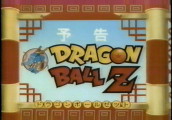
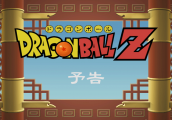
Japanese  English  "Dragon Ball Z" Title Screen | |||
| |||
| Release Date |
02 November 2002 (EU PS2) 03 December 2002 (US PS2) 13 February 2003 (JP PS2) 28 November 2003 (JP Gamecube) 28 January 2004 (US Gamecube) | ||
| Genre | Fighting | ||
| Price |
¥6,800 + tax (JP) $49.99 (US) | ||
| Developer | Dimps | ||
| Producer | Daisuke Uchiyama | ||
| Music Composer(s) | Kenji Yamamoto | ||
| Playable Characters | 23 | ||
| Copies Shipped | 570,000 (JP)[1] | ||
| Copies Sold | 3 million (World)[2] | ||
Dragon Ball Z, released internationally as Dragon Ball Z: Budokai, represents the franchise's first return to fighting games since 1997's Dragon Ball: Final Bout. The game's story and roster covers the Saiyan through Cell arcs of the franchise, roughly reflecting the ongoing airing of several international television broadcasts.
All characters and environments are rendered in a fully 3D space, with battles generally taking place on a 2D field with the occasional dynamic camera angle. In addition to basic attacks such as punches, kicks, and energy blasts, players can perform special moves via specific button combinations, as well as super moves via similar button combinations with sufficient energy gathered.
Though the original three games were simply titled with the "Dragon Ball Z" moniker in Japan, the games received a "Budokai" subtitle branding internationally. This branding was subsequently used back in Japan as well as internationally for the two Dragon Ball Z: Shin Butoden games on the Sony PlayStation Portable. As such, the collective series is generally referred to as the "Budokai" game series for clarity purposes.
Dragon Ball Z was developed by Dimps, who would go on to develop additional games in the Dragon Ball Z ("Budokai") series, as well as Dragon Ball Z: Infinite World, Dragon Ball Z: Burst Limit, and the Dragon Ball Heroes card-based arcade game series.
Planning for a new Dragon Ball game on the PlayStation 2 began as early as 2000, with an intended summer 2002 release date slipping to later that year; this placed the game squarely between the launch of the kanzenban and the first Dragon Box release in Japan, an unintended but highly beneficial timeframe.[2]
Gameplay

Unlike prior Dragon Ball fighting games, combat in Dragon Ball Z is not limited to two-dimensional space, with players able to sidestep around their opponents to position and avoid attacks. Standard attacks are divided between guarding as well as punch, kick, and energy attacks, which each receiving a designated button on the controller. Each player also has an energy meter, which can either be charged manually or increased by attacking the opponent. Players can trigger a transformation or execute special attacks by inputting the correct sequence of commands, provided the player has enough energy.
Dragon Ball Z also utilizes a customization system, which allows players to equip characters with up to seven "Capsules" that grant new abilities such as special attacks and transformations. Capsules are divided into three categories: "Ability" (能力), "Physical" (体術), and "Support" (能力). The strength of certain capsules can be increased by attaching multiple to the character. Capsules are able to be traded between players using the PlayStation 2 or Gamecube's Memory Card.
Game Modes
- Story (ストーリー Sutōrī): Fight across the story of Dragon Ball Z from the Saiyan arc to Cell arc, along with special "What-If" side stories.
- Duel (対戦 Taisen): Fight against another player/computer, or watch two computers fight each other.
- World Tournament (天下一武道会 Tenka'ichi Budōkai): Fight your way up a tournament bracket to become World Martial Arts champion and earn prizes.
- Practice (練習 Renshū): Practice your skills in the game.
- Edit Skills (スキル編集 Sukiru Henshū): Attach skill capsules to fighters to grant new moves and transformations.
- Options (オプション Opushon): Change the game settings.
- Legend of Mr. Satan (LEGEND of Mr.Satan): Defeat all the fighters at the Cell Games as Mr. Satan while undergoing a gauntlet of different handicaps.
Story
Dragon Ball Z includes a story mode following the events of the Dragon Ball Z series starting from the arrival of Raditz to the destruction of Cell. Story cutscenes are rendered fully in-engine, rather than being pre-rendered, and feature full voice acting. Story sequences are divided into episodes, which mimic the series with title cards to open each act, and occasionally utilize the narrator to review what occurred in the previous episode.
Also included in the story mode are special "What If?" scenarios, which have the player experience the story from the villain's point of view, often leading to different story outcomes.
Saiyan Arc
| Episode Number | Portrait | Title | Summary |
|---|---|---|---|
| 1 |  |
謎の異星人戦士来襲! Mysterious Alien Attack!! |
Battles: Goku vs. Raditz |
| 2 |  |
共通の大敵 A Mutually Deadly Foe |
Battles: Piccolo vs. Raditz |
| 3 |  |
サイヤ人、来襲!! Saiyan Attack!! |
Battles: Piccolo vs. Saibaimen (x6) Piccolo vs. Nappa |
| 4 |  |
孫悟空の静かな怒り Goku's Quiet Fury |
Battles: Goku vs. Nappa |
| 5 |  |
天下分け目の超決戦!! Super Duel |
Battles: Goku vs. Vegeta |
| 6 |  |
見せろ!悟飯の底力 Show Gohan's True Power! |
Battles: Gohan vs. Vegeta |
| 7 |  |
サイヤ人の王子、ベジータ Vegeta, Saiyan Prince |
Special 'What-If' episode, depicting the scenario where Vegeta defeats Earth's fighters. Health does not recover between matches. Ends with Vegeta turning Super Saiyan after being enraged by Yajirobe. Battles: Vegeta vs. Goku Vegeta vs. Kuririn Vegeta vs. Gohan |
Namek Arc
| Episode Number | Portrait | Title | Summary |
|---|---|---|---|
| 1 |  |
いざナメック星へ! Let's Go to Namek! |
Players go through a series of trials that aim to teach core game mechanics as Goku approachs Namek. Ends with battle against a 'virtual' Vegeta Battles: Goku vs. Vegeta |
| 2 |  |
ベジータ快進撃! Vegeta's Attack |
Battles: Vegeta vs. Zarbon Vegeta vs. Reacoom |
| 3 |  |
悟空、到着! Goku's Arrival |
Battles: Goku vs. Reacoom Goku vs. Ginyu Ginyu vs. Goku |
| 4 |  |
超サイヤ人への道 The Road to Super Saiyan |
Battles: Vegeta vs. Freeza (First Form) |
| 5 |  |
フリーザか!ベジータか! Freeza? Or Vegeta? |
Battles: Vegeta vs. Freeza (Final Form) |
| 6 |  |
悟空、復活!! Goku's Revival! |
Battles: Goku vs. Freeza (Final Form) |
| 7 |  |
伝説の超サイヤ人 The Legendary Super Saiyan |
Battles: Goku (Super Saiyan) vs. Freeza (Final Form) |
| 8 |  |
静かなる激闘 A Quiet But Fierce Battle |
Battles: Goku (Super Saiyan) vs. Freeza (100% Final Form) |
| 9 |  |
怒るフリーザさま Raging Freeza |
Special story scenario depicting Freeza's battles on Namek from his perspective Battles: Freeza vs. Gohan Freeza vs. Piccolo Freeza (Final Form) vs. Vegeta |
| 10 |  |
真の支配者 The True Ruler |
Special 'What-If' episode depicting the scenario where Freeza defeats Goku on Namek Battles: Freeza (100% Final Form) vs. Goku (Super Saiyan) |
Artificial Human Arc
| Episode Number | Portrait | Title | Summary |
|---|---|---|---|
| 1 |  |
新たなる脅威 A New Threat |
Battles: Goku (Super Saiyan) vs. Artifical Human No. 19 |
| 2 |  |
超サイヤ人ベジータ Super Saiyan Vegeta |
Battles: Vegeta (Super Saiyan) vs. No. 19 Vegeta (Super Saiyan) vs. No. 18 |
| 3 |  |
邪悪な予感 A Wicked Omen |
Battles: Piccolo vs. Cell |
| 4 |  |
忍び寄るセル Sneaky Cell |
Battles: Piccolo vs. No. 17 |
| 5 |  |
ベジータに自信あり! Vegeta's Confidence |
Battles: Super Vegeta vs. Cell (Second Form) |
| 6 |  |
セルの完全体完成!! Perfect Form Cell Complete!! |
Battles: Super Vegeta vs. Cell (Perfect) |
| 7 |  |
セルゲーム 始まる Cell's Game begins |
Battles: Goku (Super Saiyan) vs. Cell (Perfect) |
| 8 |  |
悟空を超えた戦士 A Warrior Beyond Goku |
Battles: Gohan (Super Saiyan) vs. Cell (Perfect) |
| 9 |  |
孫悟飯爆発!! Gohan Explodes!! |
Battles: Gohan (Super Saiyan 2) vs. Cell Jr. (x7) Gohan (Super Saiyan 2) vs. Cell (Perfect) |
| 10 |  |
最後の決戦!! The Final Battle!! |
Battles: Gohan (Super Saiyan 2) vs. Cell (Perfect, Power Form) |
| 11 |  |
目指せ!完全体 Aim For Perfect Form! |
Special story episode where Cell attempts to absorb No 18. Ends with Cell accidently absorbing Kuririn. Battles: Cell (Second Form) vs. No. 16 Cell (Second Form) vs. Kuririn |
| 12 |  |
恐るべき刺客 A Cold-Blooded Assassin |
Special 'What-If' episode depicting the scenario where Cell fights against an enraged Yamcha after accidently absorbing Kuririn Battles: Cerurin vs. Yamcha |
Playable Characters
| Portrait | Name | Forms | Techniques | Status |
|---|---|---|---|---|
 |
Son Goku | Kaio-Ken x2 Kaio-Ken x5 Kaio-Ken x10 Super Saiyan |
Kamehameha Teleportation Kamehameha Rapid Fire Kamehameha Genki-Dama Zanku-Fist Dragon Throw Super Dragon Fist |
Immediately Available |
 |
Son Gohan (Saiyan Arc) |
Potential Unlocked | Kamehameha Masenkō Continuous Ki Wave Fierce Demon Kill Hurricane Kick |
Immediately Available |
 |
Piccolo | Fuse with Nail Fuse with Kami |
Gekiretsukodan Explosive Magic Wave Makankōsappō Makūhōidan Instant Fierce Demon Kill Flying Demon Kick Fierce Demon Rampage |
Immediately Available |
 |
Tenshinhan | - | Kikōhō Dodonpa Volleyball Fist Consecutive Fist Machine Gun Fist |
Immediately Available |
 |
Kuririn | Potential Unlocked | Kamehameha Kienretsuzan Zanku-Fist Fierce Continuous Fist Continuous Strike |
Immediately Available |
 |
Yamcha | - | Kamehameha Wolf Fang Fist Wolf Fang Ki Blast Wolf Slice Fist Tiger Strike |
Complete Artificial Human Arc story mission #12 |
 |
Vegeta | Super Saiyan Super Vegeta |
Galic Cannon Final Flash Big Bang Attack Final Bride Meteor Flash Nosedive Crash Meteor Break |
Complete Saiyan Arc story mission #6 |
 |
Raditz | - | Double Sunday Saturday Crush Exciting Year Weekly Special Day Crush Dynamite Monday |
Complete Saiyan Arc story mission #1 |
 |
Nappa | - | Break Cannon Deluxe Bomber Giant Attack Megaton Throw Breakstorm |
Complete Saiyan Arc story mission #4 |
 |
Dodoria | - | Dodoria Beam Dodoria Ultra Spike Dodoria Big Blaster Dodoria Typhoon |
Complete Namek Arc story mission #2 |
 |
Zarbon | Monster Form | Possibile Cannon Hyper Elegant Magnum Super Beautiful Arrow Missing Screw Extra Graceful Cannon |
Complete Namek Arc story mission #2 |
 |
Reacoom | - | Reacoom Eraser Gun Reacoom Bomber Reacoom Buster Magnum Reacoom Maximum Vulcan Reacoom Hyper Swing Special Fighting Pose 3 Special Fighting Pose 4 |
Complete Namek Arc story mission #3 |
 |
Captain Ginyu | - | Milky Cannon Body Change Processed Power Crush Parmesan Shower Ginyu Strike Ginyu Special Special Fighting Pose 1 Special Fighting Pose 2 |
Complete Namek Arc story mission #3 |
 |
Freeza | Final Form 100% Power Mecha-Freeza |
Death Beam Death Ball Killer Ball Freeza Nightmare Meteor Crash Evil Dance |
Complete Namek Arc story mission #8 |
 |
Trunks | Super Saiyan Super Trunks Super Trunks 2 |
Buster Cannon Finish Buster Burning Attack Blast Attack Energy Burst Rapid Fall Slash Meteor Break |
Complete Artificial Human Arc story mission #6 |
 |
No. 19 | - | Photon Shot Drain Life Power Break Rolling Crush Cybernetic Pain |
Complete Artificial Human Arc story mission #2 |
 |
No. 18 | - | Power Blitz Energy Field Power Strike Power Falling Star Buster Swing |
Complete Artificial Human Arc story mission #2 |
 |
No. 17 | - | Power Blitz Energy Field Power Strike Power Falling Star Buster Swing |
Complete Artificial Human Arc story mission #4 |
 |
No. 16 | - | Rocket Punch Hell Flash Devil Crush Killing Neck Throw Finishing Splash |
Complete Artificial Human Arc story mission #11 |
 |
Son Gohan (Cell Arc) |
Super Saiyan Super Saiyan 2 |
Kamehameha Super Kamehameha Rapid Fire Shot Instant Fierce Demon Kill Fierce Demon Rampage Continuous Strike |
Complete Artificial Human Arc story mission #8 |
 |
Cell | Second Form Perfect Form Perfect Form (Power) |
Kamehameha Ultimate Attack Genki-Dama Negative Power Rain Cybernetic Raider Lasso |
Complete Artificial Human Arc story mission #10 |
 |
Mr. Satan | High Tension | Dynamite Kick Satan Special Present For You Satan Critical Attack Satan Miracle Bomber Satan Ultra Dynamite |
Win Intermediate Class Tournament |
 |
Great Saiyaman | - | Justice Punch Justice Kick Justice Flash Justice Finisher Justice Carnival Justice Dynamite |
Win Advanced Class Tournament |
Non-Selectable Characters
These characters are not playable in the game through regular means.
| Portrait | Name | Techniques | Status |
|---|---|---|---|
 |
Saibaiman | Dissolving Liquid Pumpkin Crush Gatling Carrot |
Non-Playable |
 |
Cell Jr. | Kamehameha Ultimate Attack Machine Gun Attack Cybernetic Shooter |
Alternate "Cell with Kuririn absorbed" skin playable during Artificial Human Arc Mission #12. |
Stages
The following list is presented in the order available on the stage select screen, with the original Japanese names followed by the English localization's name in parenthesis.
| Icon | Name | Status |
|---|---|---|
 |
セルリング Seru Ringu Cell Ring ("Cell Games Ring") |
- |
 |
ナメック星 Namekku-sei Planet Namek ("Planet Namek") |
- |
 |
山間平野 Sankan Heiya Mountain Plateau ("Valley Plains") |
- |
 |
天下一武道会 Tenka'ichi Budōkai Number One Under the Heavens Martial Arts Tournament ("World Tournament") |
Immediately Selectable |
 |
牧草地 Bokusō-chi Grassland ("Grassland") |
Immediately Selectable |
 |
精神と時間の部屋 Seishin to Jikan no Heya Room of Spirit and Time ("Hyperbolic Time Chamber") |
Immediately Selectable |
|
岩山 Iwayama Rocky Hills ("Rock Mountain") |
- |
 |
列島 Rettō Archipelago ("Islands") |
- |
 |
神の神殿 Kami no Shinden God's Temple ("Kami's Lookout") |
- |
Codes & Secrets
TBD
TBD
Theme Song
Dragon Ball Z's opening sequence features an in-game 3D rendering of "CHA-LA HEAD-CHA-LA", accompanied by the original version of the song itself performed by Hironobu Kageyama. While the opening animation was kept intact in America, the song was swapped to the 1996 FUNimation Dragon Ball Z English dub opening theme, "Rock the Dragon".
Soundtrack
The game's original soundtrack was composed and arranged by Kenji Yamamoto. Recordings were spread across two sessions, one in Tokyo, Japan and another in the United States in Los Angeles, California. The L.A recording sessions included collaboration from guitarist Steve Lukather, drummer Simon Phillips, and bass player Mike Porcaro of American Rock Band Toto.
HD Collection
The game's original soundtrack was completely replaced in the game's 2012 re-release in the Dragon Ball Z: Budokai HD Collection following allegations of plagiarism and Kenji Yamamoto's removal from the franchise.[3]
Packaging

Each territory's respective release received different cover artwork. America received red-toned cover featuring Super Saiyan Son Goku, Son Gohan, Piccolo, Vegeta, and Cell. Europe received a non-Super Saiyan Son Goku holding Nyoibō with a series of blue-toned characters lining the bottom (including Spopovitch, who does not appear in the game). Japan received an original illustration of Super Saiyan Son Goku; though only a portion of Goku's top half is present on the cover, a complete illustration was produced.[4]
The Japanese version's instruction manual, both on the PlayStation 2 and Gamecube, is stylized to resemble a classic Dragon Ball tankōbon cover.
Merchandise
Original Soundtrack
A single-disc original soundtrack (KDSD-42), Dragon Ball Z & Z2, was released by... 19 January 2005 for ¥2,800 (tax-included) spanning 28 tracks and covering the first two games in the series. The composition/arrangement is credited to TBD, with...................... piano by Kentarō Haneda (track 5), performances by Y.S. Project (tracks 1, 3, 4, 6, 7, 8, 9) and DBZ Orchestra (tracks 2, 10), guitar by Keisuke Murakami (tracks 1, 4, 5, 6), and soprano saxophone by Jake H. Concepcion (track 7).
| Track | Title | Length |
|---|---|---|
| 1 | Light a Fire in your Smouldering Heart!! | 1:35 |
| 2 | Big Opportunity | 5:20 |
| 3 | Expectation | 1:07 |
| 4 | Like the Warm Winds | 2:31 |
| 5 | The Sprint Towards Victory | 4:06 |
| 6 | Move Forward Fearlessly | 2:05 |
| 7 | The Challengers | 1:48 |
| 8 | Breaking Free | 2:15 |
| 9 | Countdown to the Deciding Battle! | 1:30 |
| 10 | Time of Shudders | 2:22 |
| 11 | The Mightiest Power | 2:41 |
| 12 | BUDO~Asian Spirit~ | 1:45 |
| 13 | FLaSH RuN aCRoSS THe UNiVeRSe | 1:35 |
| 14 | Spark of Fighting | 1:47 |
| 15 | A lot of 'Qi' | 1:50 |
| 16 | Go Beyond your Limits: The Limit of Ki | 1:45 |
| 17 | 7th Sense: Believe in the Power of the Supreme | 1:38 |
| 18 | Encounter | 1:55 |
| 19 | Warrior from a Mysterious Land | 1:44 |
| 20 | The Battle with All my Force | 4:12 |
| 21 | Wild-Natured Spirit: Wild Soul | 2:30 |
| 22 | Soul Vaccination | 2:49 |
| 23 | Only So Much Oil In The Ground | 2:50 |
| 24 | Soul With A Capital 'S' | 2:35 |
| 25 | I'm Gonna Get Over: The Other Side of the Horizon | 2:19 |
| 26 | Do it at All Risks | 2:25 |
| 27 | Full of Tears: In the Depths of Sadness | 4:25 |
| 28 | The Man Called 'C' | 3:19 |
Guide Book
An official Dragon Ball Z guidebook was published by Shueisha and released in Japan on 13 February 2003 for a retail price of ¥1,000.[5]
Releases
PlayStation 2

Dragon Ball Z was initially released for the Sony PlayStation 2 on 13 February 2003 in Japan, nearly 3 months after its international release in Europe and North America.
Nintendo Gamecube

Dragon Ball Z was re-released on the Nintendo Gamecube the following year featuring a new variation on the cel-shaded graphics.
International Releases
The American and European markets provided additional, ongoing success to Bandai and associated parties throughout the life cycle of the Sony PlayStation 2; all three games in the Dragon Ball Z mainline series released internationally ahead of their own domestic, Japanese release. These international editions took on the "Budokai" subtitle. All three main territories received different cover artwork, as well.
Jump Festa 2003

A special edition of the game was available for attendees of Jump Festa 2003, held in December 2002. This version's title screen specifically includes the Jump Festa (ジャンプフェスタ, Janpu Fesuta) branding.[6]
Domestic Media Coverage
- TBD
Press Releases
- PlayStation 2 exlusive software "Dragon Ball Z" launches in 20 countries around the world, Bandai Co. 11 December 2002
- New game software "Dragon Ball Z" Topped 1.94 million in 20 countries, Bandai Co. 17 February 2003
Promotions
To promote the release of Dragon Ball Z in Japan, Bandai offered a Dragon Ball Z Display Contest, tasking stores with designing and crafting their own custom store display units for the game. Out of 368 participating stores, two were selected for their displays. These stores were Kid's Land (キッズランド) in Ishikawa Prefecture, Japan, and Nishidaya Settsu Tomita (ニシダヤ摂津富田店様) in Osaka Prefecture, Japan.[7]
Commercials & Trailers
- Dragon Ball Z - Official DVD Promotional Preview (JPN)
- Dragon Ball Z - TV CM 1 & 2 (JPN)
- Dragon Ball Z: Budokai - TV CM 1
- Dragon Ball Z: Budokai - TV CM 2
International Media Coverage
- Shonen Jump, January 2003 issue, "Video Games — Dragon Ball Z: Budokai"
- Electronic Gaming Monthly, January 2003 issue, "Preview - Dragon Ball Z: Budokai"
- Electronic Gaming Monthly, February 2003 issue, "Review - Dragon Ball Z: Budokai"
- Animerica, April 2003 issue, "Review - Dragon Ball Z: Budokai"
Legacy
Alongside the third game, the first Dragon Ball Z was included as part of the Dragon Ball Z: Budokai HD Collection in November 2012 in America and Europe; Japan did not receive a localized release of this collection. Aside from "Rock the Dragon" being kept as the opening theme song, the game's entire soundtrack was replaced. The HD Collection also retained some censorship previously only seen in the European edition of the game.[8]
Additional Notes

In 2016's Dragon Ball 30th Anniversary: Super History Book, producer Daisuke Uchiyama stated that the company expected base sales due to nostalgia demand, as people who grew up with the series were coming of age with disposable income. Due to outside distributor demands, Bandai made international versions and were surprised with these sales, having initially figured that these would just be a bonus on top of what they sold in Japan. The game ended up selling around three million copies; as such, Goku was seen at Bandai as blazing a trail in their overseas business for the new generation of games and hardware.[2]
The game's production was slow in its early days due to the development process not quite being in place yet; though the game was planned for release in summer 2002, its schedule kept slipping, eventually releasing internationally in late 2002 with a Japanese release in early 2003. The 3D cel-shading came out of their trying to find a way to make it feel more like Dragon Ball. At the time there was not a lot of information about how to achieve that type of result, and so the team would make three differently shaded versions of the characters and combine those; this amounted to three times the work and three times the cost. Uchiyama and the development team felt the final 3D models were better for it compared to what they started with, and the end product, particularly by the time Dragon Ball Z 3 was developed, showed a night and day improvement that speaks for itself even today.[2]
Though only a cropped portion of the image was used in the final product, a full body drawing of Son Goku used for the game's Japanese cover art was in fact produced.[2]
Bandai's advertisements for the game went for a sense of speed with characters like Freeza and Cell, and used a minimalist approach in its posters; it had been some time since Dragon Ball was in the public consciousness, so they saw this as fanning the anticipation among people ahead of the game's release. Some advertisements that focused on ideas that would create an impact and strike but were ultimately not used included a black-and-white close up of hands doing the Kamehameha, as well as a mock quiz asking readers to fill in the box for the missing part of a bowl of rice (representing "Gohan") pointing to an empty space and then pointing down to to bread (representing "Pan").[2]
Trivia and Easter Eggs
World Tournament Audience

Hidden in the crowd of the tournament arena stage are references and cameos from other works of Akira Toriyama, including Arale Norimaki and Gatchan from Dr. Slump, and Toriyama's self-insert avatar Robotoriyama. Also seen in the crowd are what appears to be references to the series One Piece: one audience member features a straw hat resembling that of main character Monkey D. Luffy, while another character resembles Sanji with blonde hair covering one eye, a black suit and blue undershirt, and a cigarette.
Later iterations in the Dragon Ball Z game series would alter these characters to more closely resemble their regular appearance, along with introducing cameos and references from other series.
Unused World Tournament Announcements
Present in the Japanese, North American and European version of the games are extra audio files on disc containing additional World Tournament character announcements.[9] These are present in the game’s data as (“ADX_US_1441.adx” through “ADX_US_1446.adx”) in the PlayStation 2 version and (“TEN_T35(A/B).adx” through “TEN_T37(A/B).adx”) in the GameCube versions. Saibaiman (“Saibamen”), Cell Jr., and Kewi (“Cui”) all have their names announced, despite none of these characters being usable by the player. Each voice clip is dubbed appropriate to the game's region.
While Saibaiman and Cell Jr. cannot be selected as playable characters through normal means, they can both be triggered as a playable through the use of hacking. Attempting to trigger these voice clips by loading them in Tournament mode will cause the game to freeze. There is a rigged model used to represent Kewi in the game's story mode, but there is no character slot data left on disc to imply Kewi existed in playable form.
Unused Graphics
Left on the game's PlayStation 2 disc are various images that are never used in game, and likely served as images used during the game's development.
Mock-Up Fighter Select
Included in the file "KENSYO.AMT" of both the Japanese and North American PlayStation 2 release of the game are a pack of images for a mock-up fighter select screen, along with fighter portraits for Son Goku, Kuririn, Future Trunks and Cell. A "Deck" selection menu replaces the Skill System that is used in the final game, indicating the possibility that cards were intended to be used for equipping skills prior to switching to capsules.
-
 Mock Player Select Screen
 -
 Unused Goku Portrait
 -
 Unused Kuririn Portrait
 -
 Unused Future Trunks Portrait
 -
 Unused Cell Portrait


Reference Images
Also in the game's texture files are captures from the original Dragon Ball Z animated series, used as reference for the final design of the game's story-mode preview scenes.
-
 Unused reference image taken from the next episode preview of the Dragon Ball Z anime
 -
 Preview image texture used in the final game
 -
 Reference preview image taken from Dragon Ball Z: Episode 174
 -
 Preview image texture used in the final game


Voice Cast
Fighters
| Character | Japanese Voice | English Voice |
|---|---|---|
| Son Goku | Masako Nozawa | Sean Schemmel |
| Son Gohan | Masako Nozawa | Stephanie Nadolny Great Saiyaman: Kyle Hebert |
| Piccolo | Toshio Furukawa | Christopher Sabat |
| Kuririn | Mayumi Tanaka | Don Strait |
| Tenshinhan | Hirotaka Suzuoki | John Burgmeier |
| Yamcha | Tōru Furuya | Christopher Sabat |
| Vegeta | Ryo Horikawa | Christopher Sabat |
| Raditz | Shigeru Chiba | Justin Cook |
| Nappa | Shozo Iizuka | Phil Parsons |
| Dodoria | Yukitoshi Hori | Chris Forbis |
| Zarbon | Shô Hayami | Christopher Sabat |
| Reacoom | Kenji Utsumi | Christopher Sabat |
| Captain Ginyu | Hideyuki Hori | Brice Armstrong |
| Freeza | Ryūsei Nakao | Linda Young |
| Future Trunks | Takeshi Kusao | Eric Vale |
| No. 19 | Yukitoshi Hori | Phillip Wilburn |
| No. 18 | Miki Itō | Meredith McCoy |
| No. 17 | Shigeru Nakahara | Chuck Huber |
| No.16 | Hikaru Midorikawa | Jeremy Inman |
| Cell | Norio Wakamoto | Dameon Clarke |
| Cell Jr. | Hirotaka Suzuoki | Justin Cook |
| Mr. Satan | Daisuke Gōri | Chris Rager |
| Saibaimen | Tōru Furuya | John Burgmeier |
Story Characters
TBD
Game Credits
Dimps Corporation
- Executive Producer: Hiroshi Matsumoto
- Producer: Takashi Tsukamoto
- Chief-Director: Mitsuhiro Tomihata
- Technical Director: Hiroshi Waki
- Main Programmer: Takashi Nakano
- Battle Programmer: Masaki Kobayashi, Seiichi Yamaguchi, Ryosuke Nakano, Yoshikazu Takahashi, Akemi Nakashima
- Select Menu Programmer: Akemi Nakashima
- Demo Programmer: Ryosuke Nakano
- Software Library: Takashi Nakano, Masaki Kobayashi
- Authoring Tools: Hiroshi Waki, Yoshikazu Takahashi
- Localisation Programmer: Ken Shinoda, Hideaki Maruyama, Shuichi Goto
- Battle System Design: d2ac, Daisuke Aoki
- Battle Character Creator: Daisuke Aoki, Takashi Nakano
- ESS Planning: Daisuke Aoki
- Story Mode Script & Screenplay: Takeshi Yokoyama
- Opening & Demo Programming: Takeshi Yokoyama
- Character Modeling: Hitoshi Okamoto, Masato Yokoyama, Shinsuke Yamamoto
- Battle Motion: Youichiro Soeda, Atsumi Kawasaki, Atsushi Hakamada
- Demo Part: Tomoya Sakai, Atsumi Kawasaki, Tomofumi Yamaguchi, Shinji Seto, Tatsuru Murakami, Toshiyuki Kamei
- Background Modeling: Atsushi Maeda, Yae Morita, Hiroshi Yamaguchi
- 2D Design: Masato Yokoyama, Maki Fukunaga, Tomohiro Yukinari
- Effects: Atsushi Maeda, Shinobu Kanegae
- Cooperation: Raphael digit & studio
Music and Sound
- Sound Producer: Hironobu Inagaki
- Sound Director: Hiroshi Isokawa (Kujiraya Ongakudou)
- Sound Stuff: Hiroshi Kamo
- Sound Creator: Masahiko Hataya (Kujiraya Ongakudou), Kikuko Hataya (Kujiraya Ongakudou)
- Special Thanks: Masaki Tanaka, Takashi Kasai, Nao Inazumi, Madoka Jyouichi, Takashige Onishi, Ikuko Kuramoto, Nana Tanaka, Masaki Yoritomi, Yoshiaki Kawasaki, Yuki Nakanishi
- Recording Director: Kōzō Morishita, Toshihiko Arisako
- Recording Engineer: Yasuo Tachibana
- Recording Engineer Assistant: Mitsuharu Ito
- Recording Studio: TAVAC
- Sound Effects: Fizz Sound Creation, Hidenori Arai
- Casting: AONI PRO
- Composer and Arranger: Kenji Yamamoto
- Recording and Remix: Teruo Murakami (Mu)
- Mastering for Game: Takashi Kabashima (LMD)
- < Tokyo Session>:
- Guitars: Nozomi Furukawa
- Synthesizers and Programming: Kenji Yamamoto
- < L.A. Session>:
- Guitars: Steve Lukather
- Hammond B3 and Synthesizers: Tadashi Nanba
- E.Bass: Mike Porcaro
- Drums: Simon Phillips
- Strings Section Conducter: Susie Katayama
- Violins: Bruce Dukov, Belinda Broughton, Armen Garabedian, Sid Page, Miwako Watanabe, Charlie Bisharat, Joel Derouin, Endre Granat, Mark Robertson, Ken Yerke
- Violas: Roland Kato, Brian Denbow
- Celli: Larry Corbett, Armen Ksajikian
- Bass: Nico Abandolo
- L.A. Session Coordinate: Ruriko Duer (FIRST CIRCLE)
- Musical Director: Hiroshi Kamo
- Music Production Cooperation: Akiyo Kato (Office Two-One), Eiken Tanaka (Accelerand Corp.)
- Special Thanks For Sound: Christine Sirois (Sound Chamber Productions), Nick O'Toole (Sound Chamber Productions)
- Special Thanks For Sound: Kodama Yamamoto (Kenji Yamamoto Home Studio), Kanon Yamamoto (Kenji Yamamoto Home Studio)
References
- ↑ "Dragon Ball Video Game Data". 30th Anniversary: Dragon Ball Chōshishū –Super History Book–. Japan: Shueisha, 21 January 2016. ISBN 978-4-08-792505-0. (p. 216)
- ↑ 2.0 2.1 2.2 2.3 2.4 2.5 "Video Games Selection Pick Up! 03". 30th Anniversary: Dragon Ball Chōshishū –Super History Book–. Japan: Shueisha, 21 January 2016. ISBN 978-4-08-792505-0. (pp. 186-187)
- ↑ "Kenji Yamamoto Retrospective". Kanzenshuu. Retrieved: 27 April 2020.
- ↑ "Video Games Selection Pick Up! 03". 30th Anniversary: Dragon Ball Chōshishū –Super History Book–. Japan: Shueisha, 21 January 2016. ISBN 978-4-08-792505-0. (p. 187)
- ↑ "Dragon Ball Z". Dragon Ball Z. Japan: Shueisha, 13 February 2003. ISBN 4-08-779224-2.
- ↑ @pekingdaq (19 January 2018). Twitter. Retrieved: 14 November 2018.
- ↑ "Dragon Ball Z - Contest" (24 March 2003). Dragon Ball Z - Bandai Games. Retrieved: 14 May 2020.
- ↑ "Dragon Ball Z: Budokai HD Collection Contains New Censorship" (14 November 2012). Kanzenshuu. Retrieved: 26 September 2018.
- ↑ "Rumor Guide - Video Games". Kanzenshuu. Retrieved: 04 May 2020.
External Links
Dragon Ball Z - Official Bandai Games Page Mirror
Dragon Ball Z - Dimps Official Game Page Mirror
| ||||||||||||||||||||||||||||||||||||||||||||||||||||||||||||||||||||