
Oolong

|
This page is incomplete. The Kanzenshuu wiki team is aware that they must edit this page to add missing information and complete it. |
| Oolong | |
|---|---|
| ウーロン (Ūron) | |
|
Manga  Anime  | |
| Name Pun | Oolong |
| Manga Debut | Dragon Ball Chapter 5 |
| Anime Debut | Dragon Ball Episode 4 |
| Japanese VA | Naoki Tatsuta |
| Canadian VA |
Alec Willows Doug Parker |
| Funimation VA |
Dave Mallow (BLT) Alec Willows (Saban) Brad Jackson (DBZ) Bryan Massey (Kai/Super) |
| Personal Data | |
| Birth | 23 September, Age 740[1] |
| Death |
08 May, Age 774[2] Age 779[3] (Reversed) |
| Notable Skills | Transformation |
Oolong is a fictional character in the Dragon Ball manga series by Akira Toriyama. Oolong makes his debut in Chapter 5, published in the 1985 #04/05 issue of Shueisha's Weekly Shōnen Jump.
Biography
Oolong attends Southern Transformation Kindergarten, where he picks on Pu'er and gets himself kicked out for stealing the teacher's underwear.[4]
His lechery drives him to kidnap several girls from a village, by transforming into scary creatures and intimidating the villagers into doing what he wants.[5] His plan to kidnap the daughter of the man known as Sherman Priest is foiled by Bulma and Son Goku in Age 749,[6] who uncover his true identity and make him release the girls he took.[7]
Bulma pressures Oolong into joining her and Goku's quest for the Dragon Balls, thinking his transformation skill might come in handy.[7] Along the way they meet Pu'er again, alongside desert bandit Yamcha.[4] Though they are at odds at first, they eventually find themselves on the same side against Pilaf, who captures them all[8] and takes their Dragon Balls. Pilaf summons Shenlong[9] and is about to get his wish of ruling the world, when Oolong interrupts him and wishes for a pair of panties instead. The furious Pilaf captures him again,[10] but only for a short while as Goku transforms into his Great Ape form under the full moon and wreaks havoc upon Pilaf's castle.[11] Yamcha and Pu'er manage to return Goku back to normal by cutting off his tail,[12] and the group goes their separate ways.[13]
While Goku goes off to train under the Turtle Hermit, Oolong accompanies the others to Bulma's home in West City.[13] He spectates at the Tenka'ichi Budōkai whenever his friends compete in it,[14][15][16][17][18] and is pressured into taking up arms against the Red Ribbon Army when Goku storms their main base.[19] By the time Oolong and the others get there, however, Goku has already demolished the army.[20] Preferring not to take part in his friends' dangerous adventures, Oolong lives a comfortable life even through such threats as the Demon King Piccolo, the Saiyans and the Artificial Humans. He is less lucky when Majin Boo appears, who turns him into chocolate and eats him,[21] but Oolong and Boo's other victims are soon wished back to life with the Dragon Balls.[22]
Name
Oolong's name is a pun on oolong tea.
Production
Origin in Journey to the West
Like several elements within early Dragon Ball[23][24], Oolong finds his inspiration in Journey to the West, a classical Chinese folk novel published in the 16th century by Wu Cheng'en.
It has been at least half a millennium on Earth since Buddha subdued Sun Wukong and imprisoned him under a mountain. Buddha has three baskets of scriptures (15,144 scrolls) that he believes can "persuade man to do good"; in his assessment, people of the east are good, people of the north and south are too prone to violence and lechery, and while people of the west needs some prodding, they can indeed be virtuous. Buddha asks that someone go to the east to find a virtuous believer, who will then be tasked with making the trek to the west to obtain these scrolls. The Bodhisattva Kuan-Yin volunteers and departs with a few helpful items in tow from Buddha, along with a protector, Moska. After first coming across and recruiting Sha Wujing in the region of the Flowing Sand River to their cause, they continue east and come across a high mountain "covered by miasma so foul that they could not ascend it on foot." As they are instead about to fly over, a sudden blast of violent wind brings forth a new monster:[25]
Lips curled a twisted like dried lotus leaves;
Ears like rush-leaf fans and hard, gleaming eyes;
Gaping teeth as sharp as a fine steel file's;
A long mouth wide open as a fire pot.
A gold cap is fastened with bands by the cheek.
Straps on his armor seem like scaleless snakes.
He holds a rake--a dragon's out-stretched claws;
From his waist hangs a bow of half-moon shape.
His awesome presence and his prideful mien,
Defy the deities and daunt the gods.
— The Journey to the West Volume 1, Translated and Edited by Anthony C. Yu (page 191)
The demon is actually the Marshal of the Heavenly Reeds in the Heavenly River; the Jade Emperor had beaten and killed him, however, because he had gotten drunk and "dallied" with the Moon Goddess. His spirit had been seeking out a proper home for his next reincarnation when it lost its way, passing through the womb of an old pig, and ending up in its current shape. He was taken in by an elder in a cave called Cloudy Paths at the Mountain of the Blessed Mound, but when she passed away a year ago, he began passing the time by taking over the mountain ranch and eating people who passed by. Overwhelmed by the strength of the Bodhisattva's protector Moska, he begs forgiveness and agrees to accompany the monk who will make his way west in search of Buddha's scrolls. Allowing this, Kuan-Yin grants him a new surname ("Zhu") and religious name ("Bajie").[25]
Some time passes, and Kuan-Yin has successfully recruited the monkey king Sun Wukong to accompany Tang Sanzang to the west to secure Buddha's scrolls. After an ordeal with a stolen cassock, Wukong and Tang Sanzang travel for about a week's time when they come across a village and seek to rest before continuing onward. They learn that three years ago, Mr. Kao's youngest daughter was seized by a monster who kept her as his wife. The monster locked her up in another building and has refused to let her see her family for half a year now. The family is now seeking someone to defeat the monster and rescue the daughter. Wukong agrees to take the job in exchange for a place to rest. They learn that three years ago a handsome man — who said he came from the Cloudy Paths Cave of Fu-ling Mountain and that his surname was Chu (Hog) and given name Kang-lieh (Stiff Bristles) — had appeared, and since he had neither parents nor brothers, he was willing to be taken in as a son-in-law. At first he was well-behaved, and plowed the fields with no difficulty or extra tools needed. Over time, however, his appearance began to change more and more into that of a hog. His appetite was also incredible, and he would come riding in with the wind raising all sorts of disturbance in the village. Wukong and the father confirm the daughter, Green Orchid, is alive, and ask about the hog, who has apparently been taking precautions after learning that the father is out to get him. Wukong transforms into an exact likeness of Green Orchid to take her place. Posing as Green Orchid, Wukong learns all about how this hog of a man has been taking care of the family estate and that the family is out to get him now, but he is not scared because he has his nine-pronged muckrake and knows many transformations. Wukong further prods him by saying the family is seeking to recruit the Great Sage, Equal to Heaven. This finally scares the monster, who leaps out of bed and says they cannot live there anymore, prompting Wukong to reveal his true identity. The two battle for some time, but the monster eventually runs away and locks himself up inside his cave. Wukong reports back, then returns to fight some more. Wukong continues to antagonist the pig monster, asking about his rake, and even allowing the monster to whack him over the head as a free shot. The monster takes the opportunity, but it does nothing, so Wukong tells him the full story about now being on a mission with Tang Sanzang to secure Buddha's scrolls. In return, the monster then tells his story of being converted by Kuan-Yin and his promise to follow them in their journey. Upon formally grouping up with Wukong and Tang Sanzang, the character is granted yet another name:[25]
"Since you have entered my fold," said Tripitaka, "and have decided to become my disciple, let me give you a religious name so that I may address you properly." "Master," said the monster, "the Bodhisattva already laid hands on my head and gave me the commandments and a religious name, which is Chu-Wu-neng." "Good! Good!" said Tripitaka, laughing. "Your elder brother is named Wu-k'ung and you are called Wu-neng; your names are well in accord with the emphasis of our denomination." "Master," said Wu-neng, "since I received the commandments from the Bodhisattva, I was completely cut off from the five forbidden viands and the three undesirable foods. I maintained a strict vegetarian diet in my father-in-law's house, never touching any forbidden food. Now that I have met my master today, let me be released from my vegetarian vow." "No, no!" said Tripitaka. "Since you have not eaten the five forbidden viands and the three undesirable foods, let me give you another name. Let me call you Pa-chieh." Delighted, Idiot said, "I shall obey my master." For this reason, he was also called Chu Pa-chieh.
— The Journey to the West Volume 1, Translated and Edited by Anthony C. Yu (page 389)
While not able to best Sun Wukong, Zhu Bajie is largely a capable fighter throughout Journey to the West, putting his transformations and rake to good use. He is ultimately denied full Buddhahood, however, for never shedding his carnal desires, and is instead rewarded with an empty title ("Cleanser of the Altars") and all the leftovers he can eat.[26]
Pre-Dragon Ball


Between the Dragon Boy and The Adventure of Tongpoo prototype publications in 1983 and Dragon Ball's first publication in November 1984, Akira Toriyama developed drafts of the Dragon Ball stories with his editor Kazuhiko Torishima. The early drafts elaborated on the original Dragon Boy concept, incorporating elements from Journey to the West.[23][28] Having decided on a young female companion (no doubt shaped by both Dragon Boy and specifically The Adventure of Tongpoo), a western-style girl took the role of Tripitaka. Toriyama's design of Son Goku was literally that of the Monkey King himself, complete with the head decoration and staff. Zhu Bajie came over mostly intact as well, complete with his trademark rake.[27] In these early stages, it was indeed still a somewhat-faithful adaptation of Journey to the West, and was in fact rejected for being so faithful.[29]
In Toriyama's third pass — which moved through both pilot and final manuscripts — story details began to take form, as well as the names for other supporting characters. At this point, Oolong is named ウー·ロン (Ūron, which would perhaps be transliterated and spelled as "Oo Long" interpreting the interpunct as a space); the interpunct here in Oolong's, Pu'er's, and Yamcha's names would be removed for the final version. In terms of designs in this manuscript, Oolong and the others look very close to their final versions.[27]
Dragon Ball
Oolong was retained into the final version of the manga and made his first appearance in the series' fifth chapter. While Dragon Ball's Oolong is similar to the original Zhu Bajie in many ways, there are of course also numerous differences:
- Oolong retains his ability to transform from his inspiration, though Zhu Bajie's rivalry with Sun Wukong and being able to perform both fewer transformations and not being as adept at them overall is transferred into a similar rivalry with Pu'er. The five-minute transformation limit is likely a reference to Ultraman, whose transformation time limit is three minutes; Ultraman references are littered throughout Toriyama's breadth of works, with a three-minute transformation time limit having been previously used for Pingyao in Dragon Boy.
- Zhu Bajie's lechery comes through intact over to Oolong.
- Zhu Bajie's iconic rake is nowhere to be seen in the final version of Oolong, though Zhu Bajie's cap is likely at least part of the inspiration for Oolong's initial appearance.
- Zhu Bajie's re-introductory story of marrying and whisking away Mr. Kao's daughter Green Orchid is likely the inspiration for Oolong's introduction in Dragon Ball chapters five and six where he transforms and kidnaps the daughters of a village, up through and including both "Sun Wukong" and "Son Goku" dressing up like girls to infiltrate and confuse their respective pigs. In somewhat typical Toriyama fashion, this story is turned on its head by the young girls living a life of luxury, too spoiled for Oolong to handle.
Notable Skills
- Transformation - Oolong has the ability to transform into other creatures or objects for five minute intervals. During those five minutes, he can transform as many times as he wants, but when they are up he needs to wait a further minute before he can transform again. The extent that Oolong's abilities change during his transformations is unclear. While transformed into an oni, he is able to smash buildings appears to have a greater than usual amount of strength, but later while transformed into an armored knight, he appeared to only have his own strengths and weaknesses. Oolong is able to transform into flying creatures and objects, making him the earliest character in the series to have the power of flight, but only for five minutes at a time.
- Transformation Gallery (Manga)
-
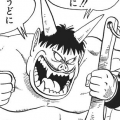 A demon/oni from chapter 5 and Dragon Ball Episode 4.
 -
 An attractive man from chapter 5 and Dragon Ball Episode 4.
 -
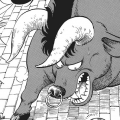 A large bull from chapter 5 and Dragon Ball Episode 4.
 -
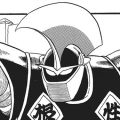 A robot/knight from chapter 6 and Dragon Ball Episode 4.
 -
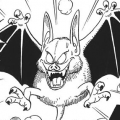 A bat from chapter 6 and Dragon Ball Episode 4.
 -
 A missile from chapter 6 and Dragon Ball Episode 4.
 -
 A fish from chapter 7 and Dragon Ball Episode 5.
 -
 An oar from chapter 7 and Dragon Ball Episode 5.
 -
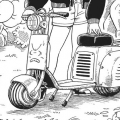 A scooter from chapter 7 and Dragon Ball Episode 5.
 -
 A pair of panties from chapter 7 and Dragon Ball Episode 5.
 -
 A fly from chapter 8 and Dragon Ball Episode 5.
 -
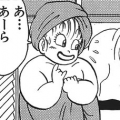


- Transformation Gallery (Anime-only)
-
 A one-eyed monster from Dragon Ball Episode 4.
 -
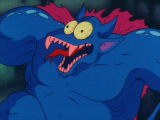 A blue monster from Dragon Ball Episode 4.
 -
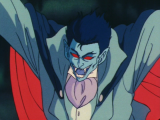 A vampire from Dragon Ball Episode 4.


Performance
Notable Appearances
References
- ↑ "Character Biography Data". Weekly Shōnen Jump, 1986 #37. Japan: Shueisha, 12 August 1986. (pp. 19-21)
"Character Biography Data" (01 December 2014). Kanzenshuu. Retrieved: 20 March 2019.
"Chronological Table of DB World". Dragon Ball Chōzenshū 4: Dragon Ball Super Encyclopedia. Japan: Shueisha, 09 May 2013. ISBN 978-4-08-782499-5. (p. 12) - ↑ "Chronological Table of DB World". Dragon Ball Chōzenshū 4: Dragon Ball Super Encyclopedia. Japan: Shueisha, 09 May 2013. ISBN 978-4-08-782499-5. (p. 24)
- ↑ "Akira Toriyama Returns With a Brief Comment! The Freeza Revival Project". Dragon Ball: Volume “F”. Japan: Shueisha, 18 April 2015. (p. 25)
- ↑ 4.0 4.1 Toriyama, Akira. Dragon Ball Chapter 8: "The Fearsome Yamcha!!". Weekly Shōnen Jump, 1985 #08. Japan: Shueisha, 22 January 1985.
- ↑ Toriyama, Akira. Dragon Ball Chapter 5: "Oolong Appears!!". Weekly Shōnen Jump, 1985 #04/05. Japan: Shueisha, 21 December 1984.
- ↑ "Chronological Table of DB World". Dragon Ball Chōzenshū 4: Dragon Ball Super Encyclopedia. Japan: Shueisha, 09 May 2013. ISBN 978-4-08-782499-5. (p. 14)
- ↑ 7.0 7.1 Toriyama, Akira. Dragon Ball Chapter 6: "Oolong vs Son Goku". Weekly Shōnen Jump, 1985 #06. Japan: Shueisha, 04 January 1985.
- ↑ Toriyama, Akira. Dragon Ball Chapter 18: "The Dragon Balls Are Stolen!!". Weekly Shōnen Jump, 1985 #18. Japan: Shueisha, 02 April 1985.
- ↑ Toriyama, Akira. Dragon Ball Chapter 19: "At Long Last, the Dragon Appears!". Weekly Shōnen Jump, 1985 #19. Japan: Shueisha, 09 April 1985.
- ↑ Toriyama, Akira. Dragon Ball Chapter 20: "The Wish to Shenlong!!". Weekly Shōnen Jump, 1985 #20. Japan: Shueisha, 16 April 1985.
- ↑ Toriyama, Akira. Dragon Ball Chapter 21: "The Full Moon". Weekly Shōnen Jump, 1985 #21. Japan: Shueisha, 23 April 1985.
- ↑ Toriyama, Akira. Dragon Ball Chapter 22: "Goku's Great Transformation". Weekly Shōnen Jump, 1985 #22. Japan: Shueisha, 27 April 1985.
- ↑ 13.0 13.1 Toriyama, Akira. Dragon Ball Chapter 23: "The Dragon Team Parts Ways". Weekly Shōnen Jump, 1985 #23. Japan: Shueisha, 04 May 1985.
- ↑ Toriyama, Akira. Dragon Ball Chapter 37: "The Second Match". Weekly Shōnen Jump, 1985 #37. Japan: Shueisha, 13 August 1985.
- ↑ Toriyama, Akira. Dragon Ball Chapter 116: "Manufactured Match-ups". Weekly Shōnen Jump, 1987 #16. Japan: Shueisha, 17 March 1987.
- ↑ Toriyama, Akira. Dragon Ball Chapter 169: "Tenshinhan and Tao Pai-pai". Weekly Shōnen Jump, 1988 #19. Japan: Shueisha, 05 April 1988.
- ↑ Toriyama, Akira. Dragon Ball Chapter 432: "The Two Small Super Warriors". Weekly Shōnen Jump, 1993 #34. Japan: Shueisha, 27 July 1993.
- ↑ Toriyama, Akira. Dragon Ball Chapter 519: "Bye-Bye, Dragon World". Weekly Shōnen Jump, 1995 #25. Japan: Shueisha, 23 May 1995.
- ↑ Toriyama, Akira. Dragon Ball Chapter 94: "Son Goku's Charge!". Weekly Shōnen Jump, 1986 #44. Japan: Shueisha, 30 September 1986.
- ↑ Toriyama, Akira. Dragon Ball Chapter 97: "The Final Dragon Ball". Weekly Shōnen Jump, 1986 #47. Japan: Shueisha, 21 October 1986.
- ↑ Toriyama, Akira. Dragon Ball Chapter 493: "Escape from the Alternate Dimension". Weekly Shōnen Jump, 1994 #48. Japan: Shueisha, 01 November 1994.
- ↑ Toriyama, Akira. Dragon Ball Chapter 514: "A Message for the Revived People of Earth". Weekly Shōnen Jump, 1995 #19. Japan: Shueisha, 11 April 1995.
- ↑ 23.0 23.1 Toriyama, Akira. "The Making of Dragon Ball". Bird Land Press 15. November 1984.
Kanzenshuu Translations Archive: Bird Land Press 15 - "The Making of Dragon Ball" - ↑ "Akira Toriyama Super Interview". Dragon Ball Daizenshuu 2: Story Guide. Japan: Shueisha, 04 August 1995. ISBN 4-08-782752-6. (pp. 261-265)
Kanzenshuu Translations Archive: Dragon Ball Daizenshuu 2: Story Guide - "Akira Toriyama Super Interview" - ↑ 25.0 25.1 25.2 Wu Cheng'en. Yu, Anthony C. The Journey to the West Volume 1. USA: The University of Chicago Press, 1977. ISBN 0-226-97150-3.
- ↑ JTTW CHP TBD
- ↑ 27.0 27.1 27.2 27.3 "BEFORE DRAGON BALL". Dragon Ball Daizenshuu 2: Story Guide. Japan: Shueisha, 04 August 1995. ISBN 4-08-782752-6. (p. 90)
- ↑ "Kazuhiko Torishima On Shaping The Success Of 'Dragon Ball' And The Origins Of 'Dragon Quest'" (15 October 2016). Forbes. Retrieved: 02 October 2020.
- ↑ "TBD". Dragon Ball: Adventure Special. Japan: Shueisha, 18 November 1987. (p. TBD)